

Key Takeaways
A Volvo suspension system affects far more than softness over bumps. Understanding its components, recognizing early symptoms, and choosing repairs based on the actual fault can help protect handling, tires, and repair budgets.
- Shocks, struts, springs, links, bushings, and control arms each influence how the vehicle rides and responds.
- Uneven tire wear, clunks, bouncing, sagging, and warning messages deserve a proper diagnosis.
- Air suspension needs leak testing and compressor evaluation rather than guesswork.
- Repair costs depend on parts, labor, corrosion, access, calibration, and whether an alignment is needed.
- A careful inspection and written estimate make suspension work easier to plan.
Understanding how Volvo suspension works
Volvo suspension is the collection of components that connects the vehicle body to its wheels while allowing those wheels to follow the road. It has to balance comfort, braking stability, cornering control, and predictable tire contact. The exact arrangement varies by model and equipment, so a repair should begin with identifying what is actually fitted to the vehicle. A vehicle equipped with conventional springs should not be diagnosed or priced as though it has air suspension.
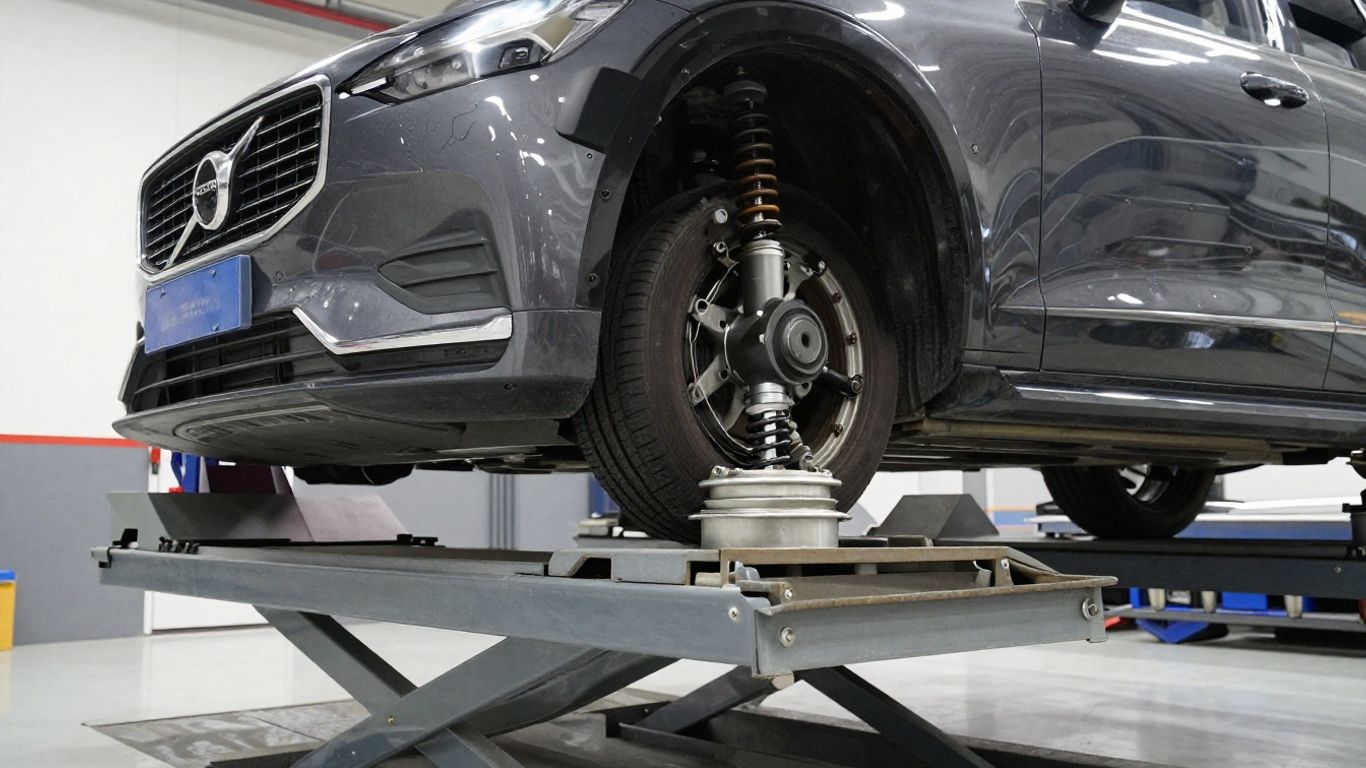
Key suspension components and their roles
Springs support the vehicle’s weight and determine much of its static ride height. Shocks and struts control the speed of suspension movement; they do not normally carry the vehicle’s weight by themselves. Control arms guide wheel movement, while ball joints, stabilizer links, and bushings allow controlled articulation without excessive play.
A strut assembly combines several functions around the wheel, while a separate shock absorber works alongside a spring and other locating components. Rubber or polyurethane bushings isolate vibration and permit limited movement. When any of these parts deteriorates, the driver may notice noise, instability, or a change in tire wear rather than one dramatic failure.
Differences between standard, sport, and air suspension
Standard suspension generally uses fixed-rate springs and conventional dampers selected for a broad compromise between comfort and control. Sport-oriented setups may use firmer springs, different damper tuning, or altered ride height. They can feel more immediate, but they may also transmit more road texture into the cabin.
Air suspension replaces a conventional spring function with an air spring and adds valves, height sensors, lines, and a compressor. It can support ride-height adjustment and load compensation when the vehicle is designed for those functions. Because it combines mechanical and pneumatic parts, diagnosis requires attention to both physical wear and leaks or electrical faults.
How suspension affects ride comfort and handling
A healthy system lets the tires stay in contact with uneven pavement while limiting body motion. Weak dampers can allow repeated bouncing after a bump, while worn bushings can make steering feel vague or produce knocking over broken surfaces. Excessive movement can also affect braking confidence and how evenly the tires meet the road.
Ride quality is not simply a matter of making everything softer. A component that is too worn, incorrectly selected, or installed under the wrong conditions can reduce control. Tire contact matters most when judging whether a suspension change has improved the vehicle.
Volvo models with advanced suspension systems
Some Volvo vehicles are offered with more complex suspension equipment than a basic spring-and-damper arrangement. The right approach is to verify the vehicle identification, factory equipment, and fault codes before ordering parts. A useful reference for owners researching component choices is Volvo C30 suspension parts, which covers control arms, bushings, springs, and shocks for that model.
Do not assume that a premium trim automatically means air suspension or electronically controlled damping. Confirming the installed system avoids mismatched parts and prevents a shop from quoting work for equipment the vehicle does not have.
Common Volvo suspension problems
Suspension faults often develop gradually. A vehicle may still be drivable while its ride becomes less controlled, a bushing begins to split, or a spring loses height. Paying attention to changes in sound, stance, steering feel, and tire wear gives a technician useful information before the inspection begins.
The following image shows the kind of underside view a technician may use when looking for damaged or displaced suspension components.
Symptoms of worn shocks and struts
Common clues include repeated bouncing, nose dive under braking, excessive body roll, and a sharp increase in impact over potholes. Fluid residue around a damper can be another warning sign, although an apparent leak should be assessed rather than judged from appearance alone. A single worn corner may make the vehicle feel unsettled even when the other three corners seem normal.
Noise is not a complete diagnosis. A rattle can come from a link, mount, spring seat, or loose hardware, while a quiet damper can still be weak. The safest conclusion comes from combining a road test with a physical inspection.
Causes of uneven tire wear and poor alignment
Uneven wear may result from incorrect toe or camber, bent parts, worn bushings, incorrect tire pressure, or a tire that has been damaged internally. Suspension height changes can also alter alignment angles. If a vehicle pulls, the steering wheel sits off-center, or one tire wears faster than its partner, alignment measurements are more useful than visual inspection alone.
Tire problems can imitate suspension faults, so pressures and tread condition should be checked first. A shop should explain which angles are outside specification and whether the underlying cause is adjustable alignment or a worn component.
Signs of failing control arms and bushings
Control-arm bushings can crack, separate, or soften with age. Drivers may hear a dull clunk during braking or acceleration, feel a wandering sensation over ruts, or notice that the steering response changes as the vehicle loads and unloads. Ball-joint play is especially significant because it affects how securely the wheel is located.
A technician may use a lift, pry bar, inspection light, and road-test observations to separate normal flex from excessive movement. Replacing only the visibly noisy part is not always enough if neighboring bushings have similar wear.
Air suspension leaks, sagging, and compressor issues
A corner that sits low after the vehicle is parked can point to an air leak, a valve issue, or a height-control problem. Slow leaks may cause the compressor to run more often, while a major leak can leave the vehicle unable to reach its normal height. Repeated compressor operation can turn a small leak into a larger repair.
An air-suspension diagnosis should include the air springs, lines, fittings, valve block, compressor, sensors, and relevant electrical circuits. Owners dealing with an XC90 message or sagging stance may find a model-specific XC90 suspension conversion kit guide, but the correct repair still depends on the vehicle’s condition and configuration.
Diagnosing Volvo suspension issues
Good diagnosis is a process of narrowing possibilities, not replacing the most visible part first. Start with the symptom, note when it occurs, and compare the behavior on smooth and rough roads. A shop should be able to connect the proposed repair to an observed fault.
A warning message can be useful, but it does not identify every failed component. Likewise, a visual inspection can reveal damage without proving that the damaged part caused the driver’s main complaint.
Checks you can perform at home
Basic checks are appropriate when the vehicle is parked safely on level ground. Do not crawl under a vehicle supported only by a jack, and stop if a wheel, spring, or air component appears unstable. A short written record of symptoms can make the professional inspection more efficient.
Useful observations include:
- Whether the vehicle sits lower on one side after parking.
- Whether it bounces more than once after a firm push at a corner.
- Whether clunks occur during turns, braking, or low-speed bumps.
- Whether the steering wheel is off-center while traveling straight.
- Whether tire wear is concentrated on an inner or outer edge.
These checks cannot confirm a failed part, but they help distinguish a repeatable symptom from a vague impression. Photographing unusual tire wear or a visibly low corner can also help if the condition changes before the appointment.
When warning lights indicate a suspension fault
A suspension warning may relate to ride-height control, an electronic damper, a sensor, or a communication fault. It can also appear alongside other messages when voltage is low or when a system cannot complete its self-check. The message should be recorded exactly, including whether it appears at startup or after driving.
If the vehicle is sitting very low, steering unpredictably, rubbing a tire, or producing severe mechanical noise, avoid driving farther than necessary. A warning light that disappears does not necessarily mean the underlying problem has gone away.
How a professional inspection identifies the cause
A thorough inspection normally combines a road test, lift inspection, measurement, and scan-tool information where applicable. The technician may check damper condition, spring height, bushing movement, ball-joint play, wheel bearings, tire condition, alignment angles, and air-system pressure retention. The order matters because one worn part can place unusual load on another.
The written findings should distinguish confirmed defects from recommendations based on age or preventive replacement. Ask for photographs or measurements when the repair is substantial. That information is valuable when comparing estimates or deciding whether work can be staged.
Distinguishing suspension problems from tire or steering issues
A vibration that changes with speed may originate in a tire or wheel rather than the suspension. A pull may be caused by tire conicity, brake drag, alignment, or steering geometry. Steering looseness can overlap with suspension symptoms because several front-end components work together to locate and turn the wheel.
The distinction comes from testing, not from the sound or sensation alone. A shop that checks tire pressures, wheel balance, tire runout, steering joints, and alignment alongside suspension parts is less likely to recommend an incomplete repair.
Volvo suspension repair and replacement options
The appropriate repair depends on whether a part is worn, bent, leaking, corroded, or simply outside its useful service life. Some jobs are straightforward component replacements; others require disassembly, special tools, system depressurization, or post-repair calibration. Parts should be selected by vehicle details and equipment, not by appearance alone.
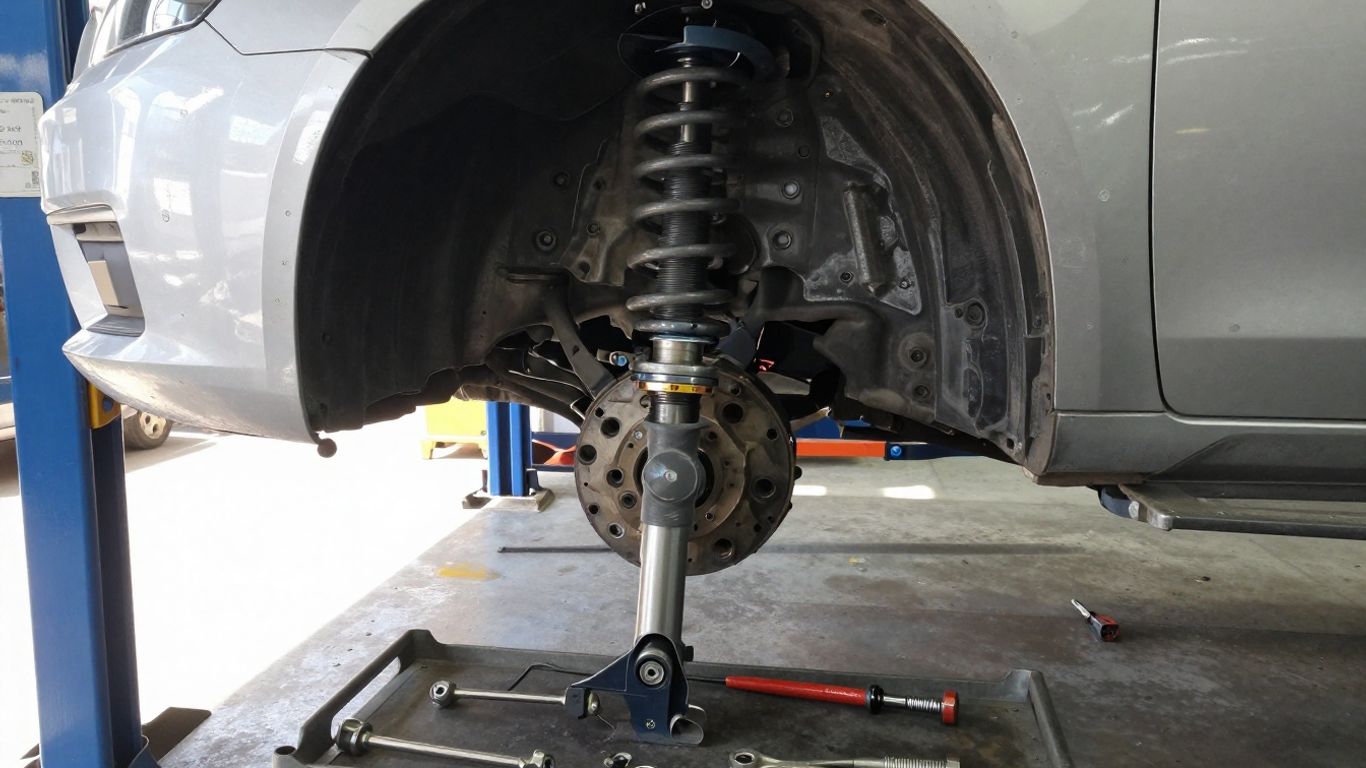
Replacing shocks, struts, and spring assemblies
Shocks and struts can sometimes be replaced as individual dampers, while a complete spring assembly may be chosen when the mount, spring, isolator, and damper are being renewed together. A complete assembly can reduce the number of reused components, but it is not automatically the best value for every vehicle.
After installation, the technician should verify fastener torque, ride height, noise, and steering behavior. If a strut has been removed or a ride-height change has occurred, an alignment may be appropriate.
Repairing control arms, links, and bushings
Control arms may be replaced as assemblies or serviced with separate bushings, depending on design, condition, and available parts. Stabilizer links are smaller but can create persistent knocking when their joints become loose. Bushing installation also requires attention to orientation and tightening position.
A repair estimate should identify whether the part is bent, loose, cracked, or leaking. If multiple locating components are worn, replacing only one may leave the original handling complaint partly unresolved.
Servicing air suspension components
Air-system work begins with locating the leak or electrical fault. A technician may test pressure retention, inspect lines and fittings, evaluate compressor operation, and check height sensors and valves. Replacing a compressor without correcting the leak that made it work excessively is a common way to increase cost without solving the cause.
Some owners compare conventional and air-equipped repair paths using a Volvo suspension parts inventory. The useful question is not which category sounds more advanced, but which component has actually failed and what the vehicle’s original system requires.
Choosing original, aftermarket, or refurbished parts
Original-equipment parts are designed to match the vehicle’s specified fit and behavior, while aftermarket parts vary by manufacturer and intended use. Refurbished components can be suitable in some situations, but their condition, testing, and warranty should be clear. The lowest purchase price is not necessarily the lowest installed cost.
Ask whether the proposed part includes required hardware, whether it changes ride height or damping, and how the warranty handles labor. For specialized equipment, confirm that the shop has followed the relevant installation and system-reset procedures.
Volvo suspension costs and maintenance factors
Suspension pricing is difficult to reduce to one number because the same symptom can have several causes. Labor access, corrosion, parts selection, and follow-up alignment all change the total. An honest estimate should separate diagnosis from repair and identify work that is urgent versus work that can reasonably wait.
Typical parts and labor cost categories
Most suspension invoices combine inspection or diagnosis, replacement parts, installation labor, related hardware, and alignment when required. Air suspension may add leak testing, electrical diagnosis, compressor or valve work, and system calibration. A spring or strut job can also involve additional mounts, isolators, or seized fasteners.
A simple category view helps explain why two estimates for the same complaint may differ:
| Cost category | What it may include | Why it varies |
|---|---|---|
| Diagnosis | Road test, lift inspection, scan, measurements | Symptom complexity and testing time |
| Parts | Dampers, springs, arms, bushings, sensors | Brand, design, and equipment level |
| Labor | Disassembly, installation, corrosion removal | Access and seized hardware |
| Alignment | Four-wheel measurements and adjustments | Geometry changes and adjustable angles |
The table is a planning tool, not a price quote. A low estimate may exclude alignment or related hardware, while a higher one may include preventive replacement that should be explained before approval.
Factors that affect the final repair bill
Vehicle age, mileage, road salt, prior repairs, and the type of suspension all matter. A shop may discover that a fastener cannot be reused, a mount is damaged, or a wheel alignment is impossible until a bent or loose part is replaced. Diagnostic time is also higher when an intermittent warning appears only under certain conditions.
For broader household repair decisions, readers sometimes use a repair versus replacement guide as a reminder to compare immediate expense with longer-term condition. The same logic applies here, but suspension decisions should be based on measured vehicle defects rather than a general rule.
When replacing components in pairs makes sense
Dampers and springs on the same axle are often considered in pairs because matched performance helps maintain balanced control. Pair replacement is not mandatory for every component, however. A clearly damaged link or a single sensor may be replaced individually when the other side is sound and the manufacturer’s procedure supports it.
The estimate should explain the reason for pairing. If one front damper is leaking and the other is original with similar mileage, replacing both may provide more consistent behavior; if one newer component failed prematurely, the answer may differ.
Preventive maintenance that can reduce long-term costs
Routine tire-pressure checks, periodic inspection, and prompt attention to new noises can limit secondary damage. Keeping alignment correct reduces unnecessary tire wear, while washing accumulated salt from accessible areas can slow corrosion. Maintenance does not prevent every failure, but it can make problems easier to catch.
A simple service rhythm is easier to follow than an ambitious one. Owners can combine suspension observations with other routines such as regular vehicle maintenance planning, while still following the vehicle manufacturer’s service information for inspections and intervals.
Volvo suspension considerations by driving conditions
Suspension wear reflects where and how a vehicle is driven. Potholes, gravel, heavy loads, freezing temperatures, and repeated short trips each place different demands on components. A repair plan that suits a lightly loaded commuter may not suit a vehicle used frequently on rough roads or for towing.
Suspension wear from rough roads and heavy loads
Sharp impacts can damage tires, wheels, springs, mounts, and control-arm components. Heavy loads keep springs compressed for longer and increase the work required from dampers. If the vehicle begins to bottom out or sits low when loaded, the cause should be identified rather than addressed with an improvised spacer or overloaded spring.
After a severe pothole, check for a new pull, vibration, visible tire damage, or a change in steering-wheel position. These signs justify an inspection even if no fluid leak is visible.
Winter weather, salt, and corrosion concerns
Salt and moisture can attack fasteners, brake lines, spring seats, and exposed suspension hardware. Corrosion can turn a routine replacement into a longer job because parts may be difficult to separate without damage. In regions with winter treatment, an underside rinse can help remove deposits, although it cannot reverse existing corrosion.
A technician should account for corrosion when giving an estimate. It is better to discuss possible seized hardware before work begins than to treat added labor as an unexpected surprise.
Towing and hauling considerations
Towing changes the load on the rear suspension and can affect braking, steering, and ride height. Use the vehicle’s specified towing and tongue-weight limits, distribute cargo correctly, and avoid treating a suspension upgrade as permission to exceed those limits. Sagging under load can point to worn springs, incorrect loading, or a system fault.
For heavy equipment, a separate fully hydraulic suspension system is described for articulated haulers operating on rough roads. That application is distinct from passenger-vehicle suspension, so its claims should not be transferred to a road car or SUV.
Adjusting expectations for performance-focused driving
Firmer suspension can sharpen response, but it may reduce isolation from rough pavement and increase sensitivity to tire choice and alignment. Performance driving also raises heat, impact, and load demands on tires, dampers, bushings, and brakes. A setup should match the intended use rather than chase the stiffest possible feel.
After modifications, check ride height, clearance, alignment, and tire wear. Changes that look modest on paper can alter geometry enough to require professional measurement.
How to choose a Volvo suspension repair shop
A good repair shop explains the fault in practical terms and separates evidence from assumption. It should be comfortable working with conventional suspension as well as any electronic or air-equipped system present on the vehicle. The conversation before authorization is often as revealing as the estimate itself.
Qualifications and equipment to look for
Look for technicians who can perform safe lift inspections, road tests, alignment measurements, and electronic diagnosis when required. Appropriate equipment may include a capable scan tool, spring and strut tools, air-system testing equipment, and alignment equipment. The shop should also follow safe procedures for compressed air and loaded springs.
Experience with the vehicle’s actual suspension configuration matters more than a generic claim of specialization. Ask how the shop confirms ride height, checks related components, and verifies the repair afterward.
Questions to ask before authorizing repairs
Ask what was found, how the finding explains the symptom, and which work is urgent. It is also reasonable to ask whether the estimate includes hardware, alignment, taxes, diagnostic time, and possible corrosion-related labor. A clear answer is more useful than a confident but unexplained parts list.
If the issue involves a torn axle boot rather than suspension, a separate CV axle boot repair guide may help clarify why the diagnosis matters. Similar noises can come from nearby systems, so the shop should identify the failed component before recommending work.
Comparing estimates and warranty coverage
Compare estimates line by line instead of comparing only their totals. Check part descriptions, quantities, labor hours, alignment charges, shop supplies, and warranty terms. A parts warranty may not cover labor, and a warranty may require installation by an approved professional.
Ask how the shop handles a recurring symptom after repair. A written warranty and a clear follow-up policy provide more practical protection than a vague promise that the work is covered.
When suspension work should include alignment
Alignment is often appropriate after work that changes the position of a wheel, steering knuckle, control arm, strut, or ride height. It may also be needed when uneven tire wear or a crooked steering wheel was part of the original complaint. Not every suspension repair changes alignment, so the recommendation should be tied to the specific operation and measured angles.
Request the before-and-after alignment sheet when alignment is performed. It shows whether the vehicle was within specification and gives a useful record for future tire and suspension maintenance.
Conclusion
A Volvo suspension problem is easier to manage when symptoms are recorded, the system is identified correctly, and repairs follow a confirmed diagnosis. Regular tire checks, timely inspections, and a transparent estimate can prevent a small fault from becoming a larger handling or tire-wear issue. The goal is not simply to replace parts, but to restore safe, balanced contact with the road.
Frequently Asked Questions
How long do suspension components usually last?
Service life varies with road quality, load, climate, mileage, driving style, and component design. Inspection findings and symptoms are more useful than a single universal replacement interval.
Can worn suspension damage tires?
Yes. Worn or bent components, incorrect alignment, and changes in ride height can alter how a tire contacts the road. Uneven tread wear should be investigated before replacing tires alone.
Is a noisy suspension always unsafe?
Not necessarily, but noise can indicate anything from a minor link issue to a problem affecting wheel location. A new, worsening, or severe noise deserves an inspection before continued driving.
Should shocks or struts be replaced in pairs?
Replacing them in axle pairs can help maintain balanced damping, particularly when both components have similar age and mileage. The technician should explain why pair replacement is appropriate in the specific case.
What causes a vehicle to sag on one side?
Possible causes include a broken or weak spring, an air leak, a failed valve, a height-sensor problem, or a damaged supporting component. The system must be tested to identify the cause.
Is an alignment necessary after suspension repair?
It depends on which parts were removed or replaced and whether ride height or wheel geometry changed. Alignment measurements are especially relevant after steering, strut, control-arm, or ride-height work.
Can suspension repairs be postponed?
Some minor noises can be scheduled for inspection, but loose wheel-locating parts, severe sagging, poor control, exposed spring damage, or tire rubbing should not be ignored. A technician can help classify the repair’s urgency.