
Key Takeaways
Choosing Volvo engine parts starts with identifying the exact engine and application, not simply searching by vehicle name. Careful catalog work, fitment checks, and maintenance planning reduce costly mistakes.
- Record the engine model, serial number, year, and application before searching.
- Use diagrams and superseded part numbers to trace the correct component.
- Compare quality, warranty, service life, and total installation cost—not price alone.
- Confirm dimensions, seals, kits, and equipment compatibility before ordering.
- Keep common wear items available and involve a qualified technician when needed.
Understand which Volvo engine parts you need
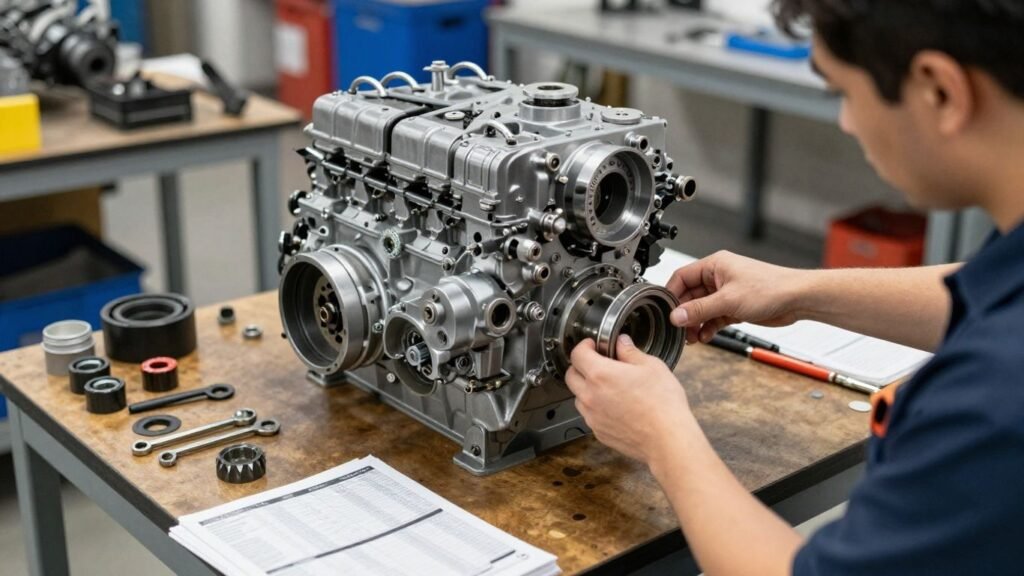
The phrase Volvo engine parts covers several very different applications. A marine inboard engine, a passenger car engine, and a heavy-duty truck engine may share a brand family while using entirely different components. Start with the machine and engine identity, then narrow the search to the right parts family.
Identifying Volvo Penta, Volvo Cars, and Volvo Trucks applications
First establish whether the engine belongs to a marine, automotive, or commercial vehicle application. Record the vessel or vehicle model as well as the engine designation, because accessories, mounting arrangements, controls, and service parts can vary even when engine names look similar. For marine research, the Volvo Penta Shop is a useful catalog reference for genuine Volvo Penta parts and accessories.
Using the engine model, serial number, and year
An engine model is a starting point, but the serial number is often what separates one configuration from another. Write down the complete number exactly as shown on the identification plate, including prefixes and suffixes. The year helps narrow revisions, while the equipment model can reveal whether the engine was installed in a truck, machine, boat, or other application.
Distinguishing genuine, aftermarket, and remanufactured parts
Genuine parts are sourced through the manufacturer’s parts channel, while aftermarket parts are made by other suppliers and may vary in materials, tolerances, and included hardware. Remanufactured parts have been rebuilt and tested according to the rebuilder’s process. Compare the specification, warranty, documented inspection, and return terms rather than assuming that any one category is automatically right for every repair.
Matching parts to gasoline, diesel, and marine engines
Fuel type changes the search substantially. Diesel systems may involve injectors, high-pressure fuel equipment, and turbocharger-specific parts, while gasoline engines can require spark-ignition components and different fuel controls. Marine engines also bring in seawater cooling, corrosion protection, exhaust routing, and installation-specific hardware, so a part that fits a land vehicle may still be unsuitable for a boat.
Explore the main categories of Volvo engine parts
A useful way to organize a parts search is to work from the engine’s core outward. Internal components determine the basic mechanical condition; fuel, air, and exhaust parts affect combustion; cooling and lubrication protect operating temperatures and surfaces; electrical components make starting and control possible. This structure helps you spot related parts that may need inspection at the same time.
Engine block and internal components
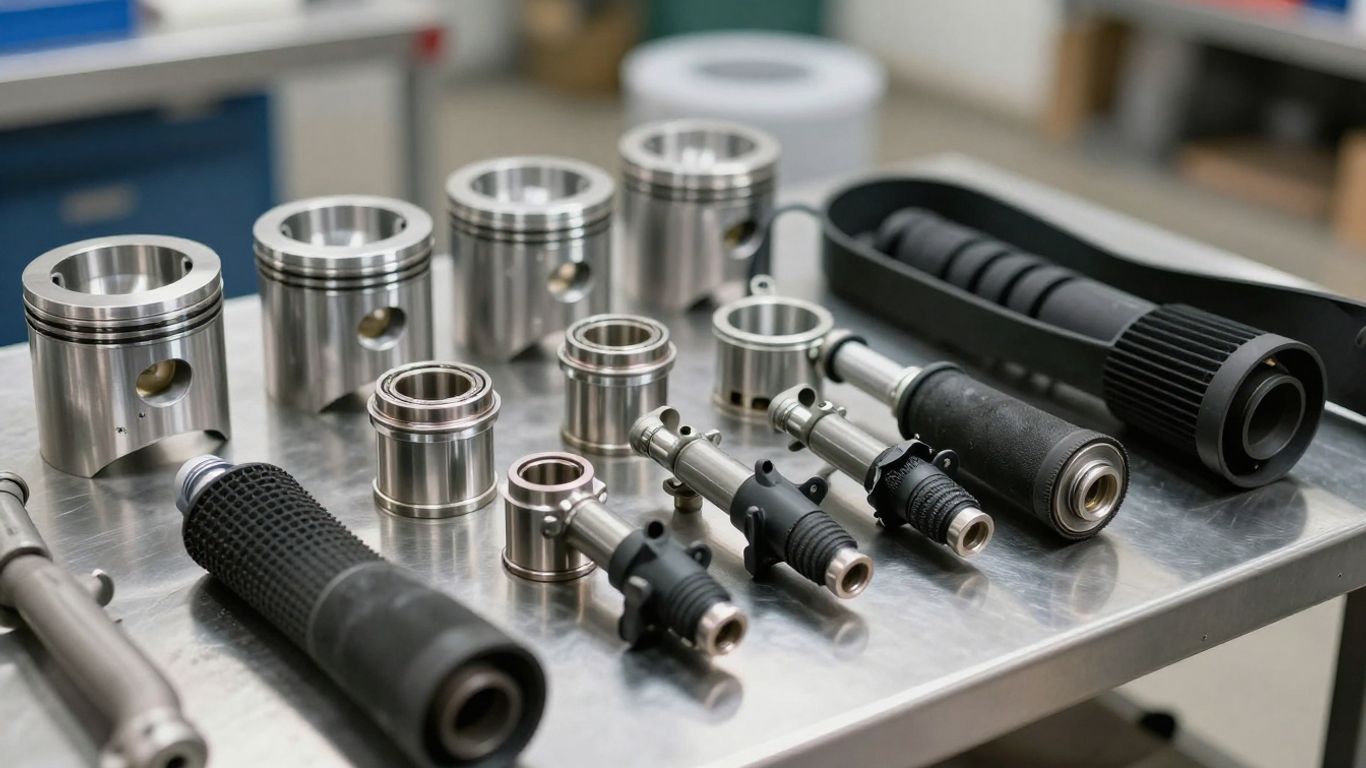
The block category includes pistons, rings, connecting rods, bearings, cylinder liners, crankshafts, camshafts, and related fasteners. A repair may call for one replacement component, but measurements can reveal that several parts have worn together. Before ordering, check whether the job is a targeted repair or a rebuild requiring a coordinated set of internal components.
Fuel, air, and exhaust system components
Fuel pumps, injectors, filters, manifolds, intake parts, turbochargers, and exhaust components must be matched to the engine’s fuel system and emissions arrangement. The Genuine Volvo Engine Parts catalog describes a selection that includes complete-overhaul components and individual replacement parts, as well as alternators, starter motors, injectors, and turbochargers. Treat that description as a parts-range reference, then verify the specific number for your engine.
Cooling and lubrication system parts
Cooling parts may include water pumps, thermostats, radiators, hoses, heat exchangers, and seals. Lubrication work can involve oil pumps, filters, coolers, sumps, and gaskets. A recurring leak or overheating symptom may involve more than the visibly damaged piece, so inspect mating surfaces, hoses, clamps, and fluid condition before finalizing the order.
Electrical, ignition, and starting components
Alternators, starter motors, batteries, wiring, sensors, and ignition components belong to a system rather than a single isolated repair. Check voltage, amperage, connector style, gear arrangement, and mounting points. For marine engines, the Volvo Penta marine parts catalog is one example of a source listing components for gasoline and diesel sterndrive and inboard applications.
Use a Volvo engine parts catalog effectively
A catalog is more than a shopping list. It connects an assembly drawing to a numbered item, shows how pieces relate to one another, and may reveal that a current part replaces an older number. Take time to read the diagram before clicking an order button; a few minutes of orientation can prevent an expensive return.
Reading exploded diagrams and part numbers
Exploded diagrams show the relative position of components, but they do not always show every washer, seal, or installation detail at full scale. Match the callout number to the parts list, then copy the full part number and description into your notes. Pay attention to quantity, orientation, and whether the listed item is sold separately or as part of an assembly.
Checking superseded and replacement numbers
A catalog may show an older number crossed to a newer replacement. That change can reflect a revised design, packaging change, or updated supply reference. Do not treat a supersession as proof that every neighboring component is unchanged; ask the supplier to confirm the replacement against your serial number and application.
Comparing assemblies with individual components
Buying an assembly can simplify installation and reduce the chance of mixing incompatible internal pieces, but it may cost more than replacing one verified component. Individual parts can make sense when surrounding components have been measured and found serviceable. Compare what is included in each option, especially seals, fasteners, sensors, brackets, and adjustment hardware.
Verifying compatibility across model years
Model-year names are not enough to establish interchangeability. Production changes can affect connectors, software-related sensors, mounting points, emissions equipment, and cooling layouts. A practical catalog review should compare the engine serial range, the part’s supersession history, and any application notes before treating two model years as equivalent.
Choose the right source for Volvo engine parts
The best source depends on the part’s criticality, urgency, and availability. A dealer may provide the strongest application support, while a specialist supplier may have useful aftermarket or remanufactured inventory. Online listings can widen the search, but the buyer still has to validate the item rather than relying on a photograph or a broad title.
Buying from authorized Volvo and Volvo Penta dealers
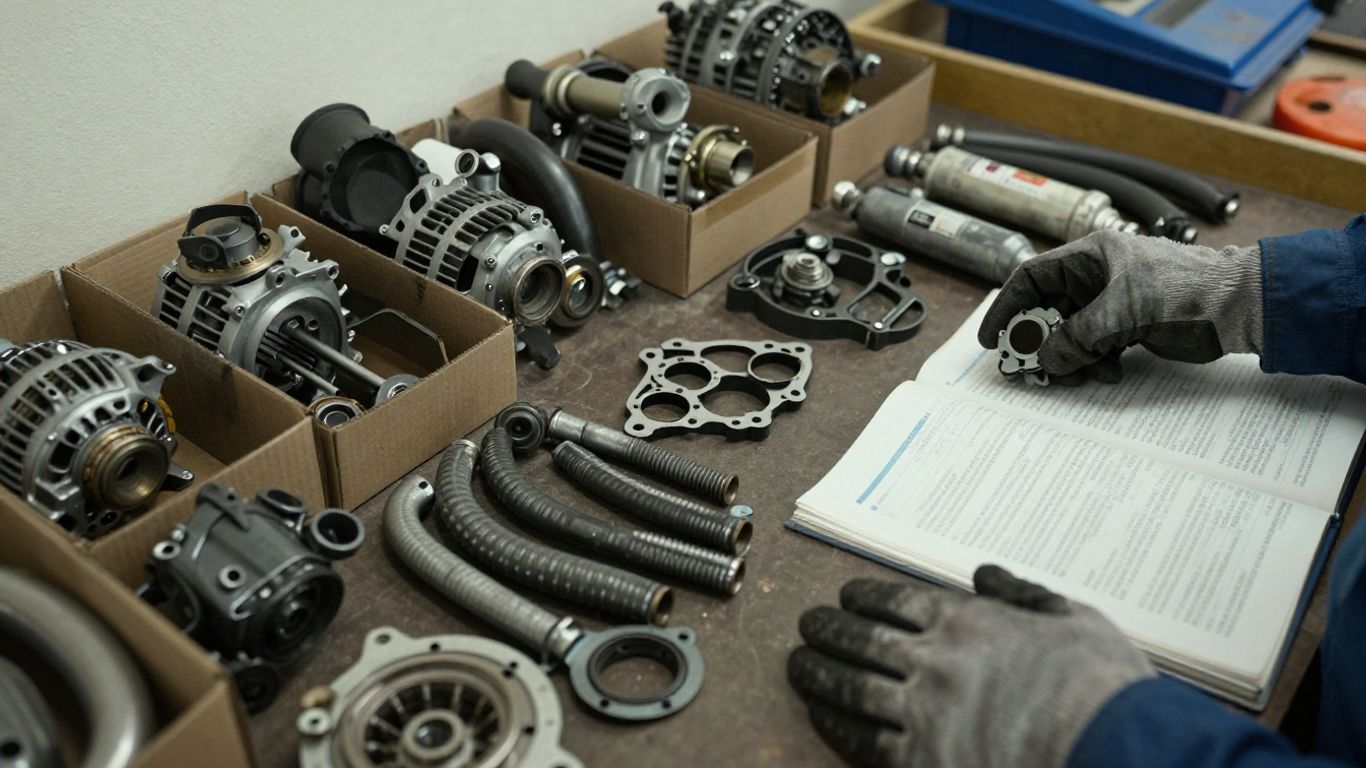
An authorized dealer is often the sensible first stop for serial-number research, current part numbers, technical clarification, and parts with safety or calibration implications. Dealer support can also help when a component is superseded or supplied only within an assembly. For marine applications, Volvo Penta parts and accessories provides another catalog-style reference for components such as starters, alternators, carburetors, exhaust manifolds, and fuel-system parts.
Evaluating online parts suppliers and marketplaces
Online suppliers are useful when you need to compare stock, delivery times, and prices across several sources. Read the complete listing, not only the headline, and ask for a written fitment confirmation when the description is broad. A supplier that cannot explain its source, warranty, or return process may create more risk than the apparent savings justify.
Comparing OEM, aftermarket, and used inventory
Compare each option on specification, condition, traceability, and expected service life. Used parts can be practical for non-wear items or hard-to-find assemblies, but inspect them for corrosion, damage, and unknown operating history. For heavy-duty diesel applications, a listing for Volvo D12 and D13 diesel engine parts illustrates how a specialist source may focus on aftermarket components for truck engines; the exact listing still needs application confirmation.
Checking warranty, returns, and supplier support
Warranty language should identify the covered part, time period, exclusions, and whether labor is included. Confirm the return window before opening packaging or installing anything, and keep invoices, photographs, and serial-number correspondence. Even unrelated service decisions benefit from clear terms—whether comparing a Private Car Service or buying a mechanical component, the price and conditions should be visible before commitment.
Verify fitment before ordering
Fitment is a process, not a label. A listing can say that a part suits a broad engine family while omitting a crucial serial break, connector difference, or equipment variation. Before paying, compare the catalog information with the part removed from the engine and with the machine’s identification data.
Cross-referencing dimensions and specifications
Measure only where the service documentation permits it, and use the manufacturer’s stated tolerances rather than guessing from appearance. Compare thread size, shaft dimensions, gasket shape, electrical ratings, flow direction, and mounting-hole positions. A small difference can change sealing, alignment, or load capacity, even when two parts look nearly identical.
Confirming engine and equipment compatibility
The engine is only one part of the fitment picture. Installation location, transmission, cooling arrangement, control system, and emissions equipment can all matter. When a source lists several applications, ask it to confirm the complete combination of engine model, serial range, vehicle or vessel, and production year.
Reviewing gaskets, seals, and installation kits
Replacing a major component often exposes seals that should not be reused. Review whether the order needs a gasket set, O-rings, stretch bolts, filters, fluid, or one-time-use fasteners. A complete kit may shorten downtime, but only if its contents match the actual repair and the supplier identifies the included specifications.
Avoiding common ordering mistakes
Most avoidable errors come from incomplete information rather than obscure technical problems. Before checkout, use this short review:
- Confirm the full engine serial number and application.
- Compare the old part number with the current catalog number.
- Check quantity, dimensions, connectors, and included hardware.
- Verify shipping timing, warranty, and return conditions.
This check is simple, but it catches the familiar mistakes: ordering by a vehicle nickname, overlooking a serial break, buying a bare component when a seal is required, or assuming a photograph proves compatibility. A disciplined process also resembles the careful verification described in an autonomous systems guide, though the mechanical evidence here remains the engine documentation and measurements.
Maintain and replace Volvo engine parts
Good parts selection and good maintenance reinforce one another. A component that is replaced without correcting the cause of failure may wear again quickly, while a small warning sign addressed early can prevent damage to neighboring systems. Use service records, operating conditions, and observed symptoms together rather than relying on mileage alone.
Recognizing signs of wear and component failure
Watch for hard starting, unusual smoke, overheating, oil pressure changes, fluid loss, charging faults, new vibration, or abnormal noise. The same symptom can have several causes, so avoid condemning a part from one observation. Confirm the diagnosis with inspection, testing, and the relevant service procedure before ordering expensive components.
Following recommended inspection intervals
Inspection intervals vary with engine design, application, load, environment, and operating hours. Marine engines may need attention after periods of storage, while commercial equipment may accumulate hours quickly under heavy load. Keep a record of fluid changes, filter replacement, belt condition, cooling-system checks, and any measurements that establish a trend.
Preparing for installation and maintenance
Clean the work area, identify removed parts, protect open fuel and oil passages, and use the specified tools and tightening procedures. Lay out the replacement parts before disassembly goes too far, checking seals and orientation against the diagram. Good preparation reduces contamination and makes it easier to notice a missing washer, damaged connector, or incorrect gasket.
Knowing when to use a qualified technician
Seek qualified help for internal engine work, fuel-system calibration, timing, emissions-related repairs, or jobs requiring specialized measurement equipment. A technician can also help when the failure cause is uncertain or when a mistake could damage a complete assembly. Safety matters as much as cost, particularly around hot fluids, pressurized fuel, rotating parts, and heavy components.
Manage Volvo engine parts costs and availability
The purchase price is only one part of a repair budget. Labor, fluids, gaskets, shipping, downtime, core charges, diagnostics, and possible follow-up work can change the final figure. A realistic estimate gives you a better basis for choosing between a new individual component, a kit, an assembly, or a professionally remanufactured option.
Estimating total replacement and installation costs
Ask for a written estimate that separates parts, labor, freight, taxes, diagnostic time, and consumables. Include related work that becomes accessible during the repair, but distinguish recommended prevention from essential correction. This makes the decision clearer and prevents a low initial parts quote from hiding a much larger installation cost.
Balancing price, quality, and service life
A cheaper part may be reasonable for a low-risk, easily replaced item, while a critical internal or fuel-system component deserves closer scrutiny. Compare documented materials, testing, warranty, and expected service life. Total cost matters more when a failure would require a second teardown, extended downtime, or damage to connected components.
Planning for hard-to-find or discontinued components
When a part is discontinued, search by old and superseded numbers, assembly references, and the engine’s complete identification data. Ask whether a repair kit, remanufactured unit, or compatible revision is formally documented. Avoid modifying a substitute until a qualified person confirms dimensions, materials, operating limits, and installation consequences.
Keeping critical spare parts in stock
Stocking every possible component is unnecessary, but common service items can prevent avoidable downtime. Choose spares according to operating environment, delivery access, failure history, and storage life. Filters, belts, seals, impellers, clamps, and selected electrical items may be sensible candidates when the application and manufacturer guidance support keeping them on hand; a fleet can also use ABM guidance as a general reminder to prioritize resources around its highest-value operating needs.
Conclusion
The right Volvo engine parts are found through identification, catalog discipline, fitment checks, and realistic maintenance planning. When you match the component to the exact engine and application, compare the full cost of each option, and ask for technical help when the repair demands it, sourcing becomes far less uncertain.
Frequently Asked Questions
How do I identify the correct engine part?
Record the engine model, complete serial number, production year, and vehicle, vessel, or machine application. Use all four details when checking a catalog or asking a supplier to confirm fitment.
Are aftermarket engine parts always unsuitable?
No. Their suitability depends on specification, manufacturing quality, application, warranty, and documented compatibility. Compare those details with the demands of the repair rather than choosing only by label or price.
What does a superseded part number mean?
It usually means a newer catalog number has replaced an older reference. Confirm that the replacement applies to your serial range and determine whether any related components or installation instructions have changed.
Should I replace gaskets when replacing a component?
Often, yes, especially when a seal is disturbed, compressed, heat-affected, or intended for one-time use. Check the service procedure and the kit contents rather than assuming every gasket can be reused.
When is a remanufactured part a sensible option?
It can make sense when the rebuilder’s process, inspection standards, warranty, and core requirements are clear. The decision is stronger when the part is expensive, available new only with a large assembly, or supported by a reputable specialist.
How can I reduce the risk of ordering the wrong part?
Use the full identification data, compare diagrams and dimensions, verify included hardware, and request written fitment confirmation for ambiguous listings. Keep the original part until the replacement has been checked.
When should a technician handle the repair?
Use a qualified technician for internal engine work, high-pressure fuel systems, timing, emissions equipment, heavy components, or any repair requiring specialized tools and measurements. Professional diagnosis is also wise when the failure cause is unclear.