

Key Takeaways
A Volvo transmission can be automatic, automated manual, or manual, and each type has different service needs. Understanding the design, noticing symptoms early, and using the correct repair approach can prevent a minor fault from becoming a major expense.
- Identify the transmission type before planning service or repairs.
- Treat delayed shifts, slipping, overheating, and leaks as useful warning signs.
- Use the fluid specification and service schedule intended for the exact transmission.
- Confirm diagnostic codes with symptom checks and a proper road test.
- Compare repair costs, replacement options, and the vehicle’s remaining value.
Understanding Volvo transmission types
The phrase Volvo transmission covers several different designs used across passenger cars, older models, and heavy-duty vehicles. A transmission may select gears hydraulically, electronically, or through an automated clutch and shift mechanism. Model year, engine, drivetrain, and intended use all matter, so a general statement about one unit may not apply to another.
Automatic transmissions and Geartronic systems
Conventional automatic transmissions use a torque converter, planetary gearsets, hydraulic circuits, and electronic controls to select ratios without a clutch pedal. Geartronic systems combine automatic operation with the option of manual gear selection through the gear selector. The system is available in several speed configurations, so identifying the specific unit remains essential before checking fluid requirements or planning repairs.
The Geartronic system is described as a microprocessor-controlled manumatic transmission that supports both automatic and manual gear selection. Its documented applications include several Volvo passenger-car models and multiple speed configurations. That range is one reason technicians should verify the vehicle identification and transmission code rather than relying on appearance alone.
I-Shift automated manual transmissions
An automated manual transmission uses a conventional gear train and clutch, but electronic and mechanical systems operate the clutch and change gears. It is different from a traditional automatic because the underlying design is manual rather than torque-converter based. The driver still experiences automated shifting, while the control system chooses when to engage the clutch and select a ratio.
The Volvo I-Shift is documented as an automated manual transmission for heavy-duty applications. Its control system monitors conditions such as grade, speed, weight, and engine load to optimize shifting. Heavy-haul, severe-duty, and crawler-gear versions are separate configurations, not assumptions that should be applied to every I-Shift-equipped vehicle.
Manual transmissions in older Volvo models
Older vehicles may use a manual gearbox with a clutch pedal and a direct mechanical connection between the driver’s gear selection and the transmission. These units are generally easier to understand mechanically, but their clutch, synchronizers, bearings, seals, and shift linkage can all wear. A hard-to-select gear may therefore come from the clutch or linkage rather than from the gearset itself.
Service records are especially valuable with an older manual vehicle. Fluid level, oil specification, clutch adjustment, and previous rebuild work can influence how the transmission behaves. Compatibility questions between model years also deserve care; a gearbox that physically fits may still have different ratios, mounts, sensors, or driveline connections.
How drivetrain configuration affects transmission design
Front-wheel-drive, rear-wheel-drive, and all-wheel-drive layouts place different demands on the transmission housing and related driveline components. An all-wheel-drive vehicle may include additional transfer or coupling hardware, while a rear-drive commercial vehicle may be designed around higher loads and different cooling needs. The same model name does not guarantee an interchangeable transmission.
Before ordering a replacement, confirm the engine, model year, drive configuration, transmission code, connector arrangement, and calibration requirements. A useful external Volvo transmissions guide discusses model variation, fluid checks, compatibility questions, and repair concerns. It is best treated as background research, with final fitment confirmed against the vehicle’s own records and service information.
How a Volvo transmission works
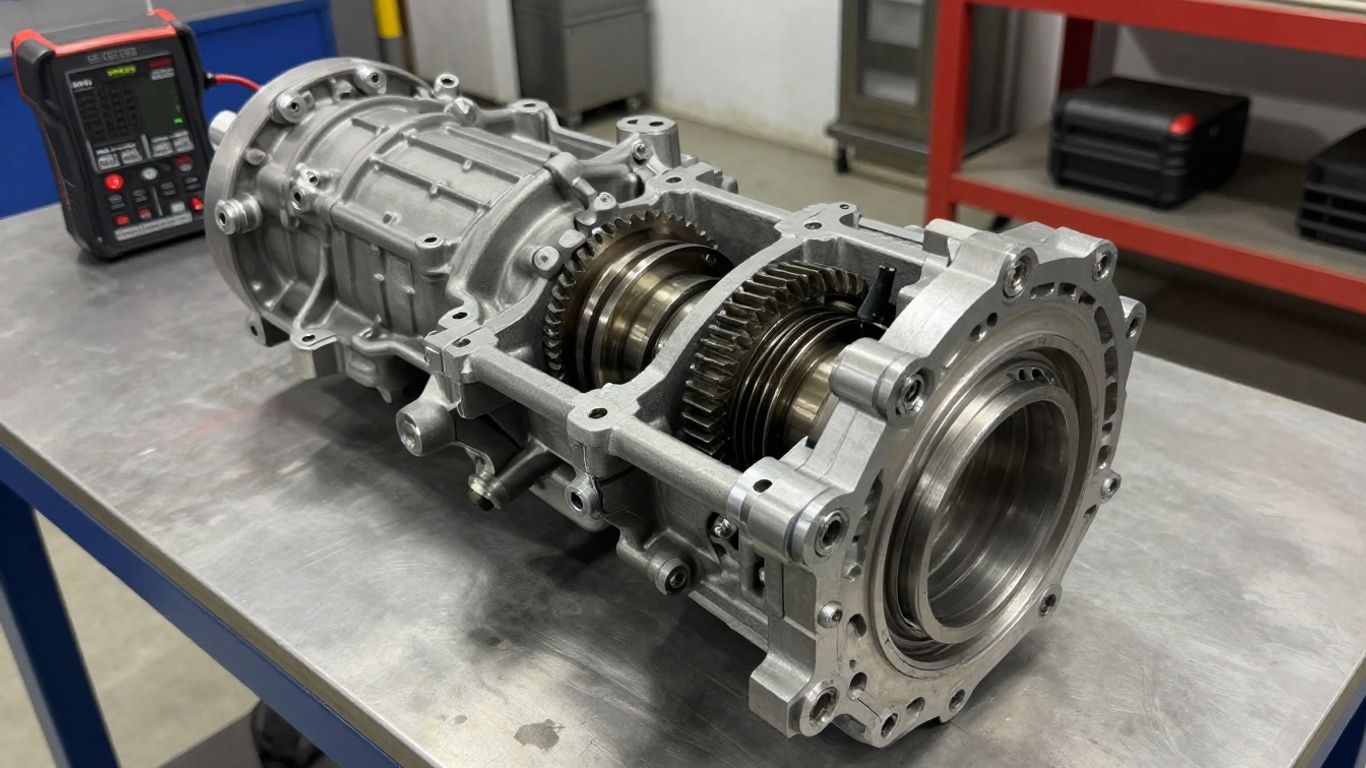
A transmission manages the compromise between engine speed and wheel speed. Lower gears multiply torque for starting and climbing, while higher gears let the vehicle travel efficiently at speed. The process depends on mechanical components, fluid pressure, sensors, and software working together rather than on gears alone.
Gear selection and power delivery
When the driver accelerates, the control system considers throttle input, vehicle speed, engine load, and other operating data before selecting a ratio. Hydraulic pressure or an automated clutch then applies the relevant internal components. Smooth power delivery depends on correct timing; a delay or sudden engagement can indicate a control, pressure, fluid, or mechanical problem.
The transmission also has to release one ratio while applying another. That transition is why a small change in fluid pressure or clutch condition can be felt as a flare, bump, hesitation, or shudder. A technician looks at when the symptom occurs, not merely whether the vehicle eventually changes gear.
The role of transmission fluid and filters
Transmission fluid lubricates moving parts, carries heat away, and provides the hydraulic medium needed for many automatic shifting functions. Filters and screens help control contamination, although their design and serviceability vary by transmission. Using an unsuitable fluid can alter friction characteristics or pressure behavior even when the level appears correct.
Fluid condition should be interpreted with the transmission design and service procedure in mind. Color alone is not a diagnosis, and a dark sample does not automatically prove that a flush is appropriate. The correct level, temperature, checking method, and fluid specification are all part of the procedure.
Electronic controls, sensors, and solenoids
Sensors report information such as speed, temperature, pressure, and selector position. The transmission control module uses that information to command solenoids and other actuators. A faulty sensor, damaged connector, wiring problem, or software issue can therefore imitate an internal mechanical failure.
Electronic diagnosis works best when codes are combined with live data and physical inspection. Replacing a solenoid simply because a shift feels harsh may miss a low-fluid condition, damaged wiring, or a broader pressure problem. Accurate diagnosis saves parts and time when several causes produce similar symptoms.
Differences between conventional automatics and dual-clutch systems
A conventional automatic generally uses a torque converter and planetary gearsets, while a dual-clutch transmission uses two clutches to manage alternating gear groups. Their engagement feel, maintenance procedures, and failure patterns are not identical. A low-speed hesitation in one design may have a different explanation in the other.
The vehicle’s service information should identify which design is installed and how its fluid level is checked. Generic advice about automatic transmissions can be misleading when applied to a dual-clutch unit. The distinction also matters when considering adaptation resets, clutch replacement, or software calibration.
A general video about automatic transmission operation can help explain the moving parts, but it cannot replace model-specific testing. Use it to understand terminology, not to choose a fluid or authorize a repair.
Common Volvo transmission problems
Transmission symptoms often develop gradually. A brief hesitation may become a repeated delay, and a small leak may eventually reduce the fluid level enough to affect operation. Recording the conditions around a symptom gives a repair shop more useful information than describing the vehicle as simply “shifting badly.”
Delayed or harsh shifting
A delayed shift may occur when selecting Drive or Reverse, or during an upshift or downshift on the road. Harsh engagement can be linked to fluid level, pressure control, solenoids, adaptations, mounts, or internal wear. The timing of the event helps narrow the possibilities: a cold-only symptom points in a different direction from one that appears after extended driving.
Avoid repeatedly cycling the selector or applying heavy throttle to force a response. That can add heat and stress while providing little diagnostic value. Note whether the delay changes with temperature, throttle position, slope, or the use of manual selection.
Slipping gears and loss of acceleration
Slipping occurs when engine speed rises without a matching increase in road speed. It may be caused by worn clutch packs, low hydraulic pressure, a damaged valve body, incorrect fluid level, or another internal fault. Loss of acceleration can also come from engine control problems, so the symptom needs to be assessed alongside warning lights and scan data.
A vehicle that repeatedly flares between gears should not be driven aggressively. Continued slipping creates heat and friction material, which can turn a repairable control problem into wider internal damage. Prompt testing is usually less expensive than waiting for the vehicle to stop moving.
Transmission overheating and warning messages
Heat is a major concern because fluid loses effectiveness as temperatures rise, while seals and friction materials can deteriorate. Towing, heavy traffic, steep grades, low fluid, restricted cooling, and internal slipping can all contribute. A warning message should be read in context rather than dismissed because the vehicle still drives.
If an overheat warning appears, reduce load and follow the vehicle’s instructions. Continuing to tow or accelerate hard may worsen the condition. A professional should check for stored codes, cooling performance, fluid level, and the cause of the heat rather than merely clearing the message.
Fluid leaks, shuddering, and unusual noises
Leaks may come from pan seals, axle seals, cooler lines, electrical connectors, or other housing points. Shuddering can occur during converter engagement or a clutch transition, while whining, grinding, or rattling may suggest bearing, gear, pump, or mounting concerns. The location and character of a leak or noise matter.
Clean fluid on the ground does not prove that the transmission itself is failing, and an oily transmission does not reveal the source without inspection. A shop can clean the area, use a suitable tracing method, and recheck it after operation. That is more reliable than tightening random fasteners.
When limp mode indicates a serious fault
Limp mode limits operation to protect the drivetrain or maintain a basic level of mobility after a detected fault. It may be triggered by an electrical issue, a sensor reading, pressure irregularity, overheating, or internal damage. The reduced performance is a warning that the control system has identified a condition worth investigating.
Drive only as far as necessary to reach a safe location or repair facility, especially if there is slipping, a burning smell, a major leak, or an inability to select a gear. Do not assume that clearing the code has fixed the underlying problem. The fault history and operating data should remain part of the diagnosis.
Volvo transmission maintenance requirements
Maintenance is not just a fluid-change decision. It includes leak inspection, correct level-setting, cooling-system checks, software considerations, and attention to the way the vehicle is used. A service plan should follow the exact transmission and the manufacturer’s published requirements rather than a universal mileage slogan.
Recommended fluid change intervals
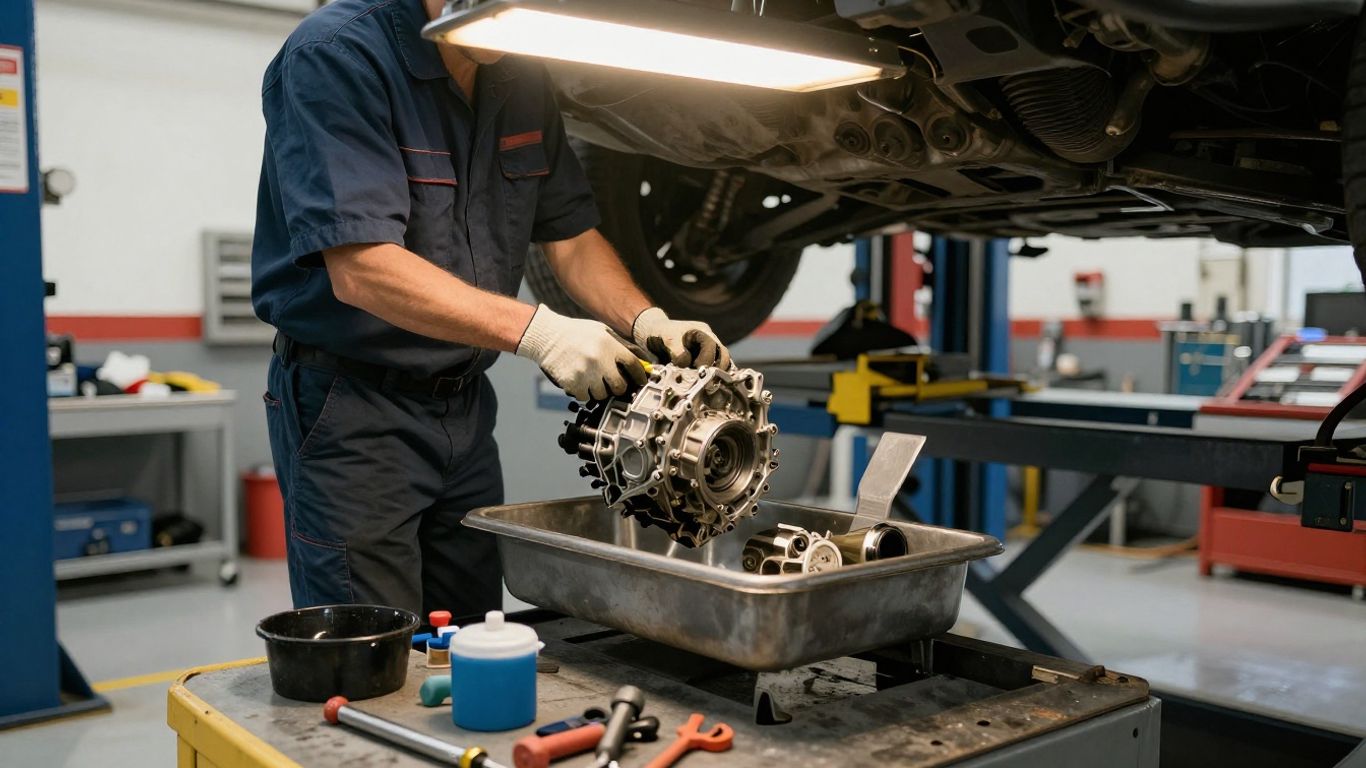
Fluid intervals vary by transmission, model, market, and driving conditions. Some service information may specify inspection, replacement, or no routine interval under particular assumptions. The safest starting point is the vehicle’s manual or a verified service schedule for its transmission code.
One service provider recommends Volvo transmission fluid inspections around 50,000 miles and fluid changes around 90,000 miles, but those figures are source-specific and should not be treated as a universal rule. The Volvo fluid service information also describes replacing fluid, filters, and potentially other components as part of a comprehensive service. Confirm the correct interval before booking work.
Choosing the correct transmission fluid
Fluid specifications are not interchangeable simply because two products are labeled automatic transmission fluid. Friction behavior, viscosity, additive chemistry, and temperature performance all affect operation. The required specification should be confirmed by model, transmission, and service documentation.
A technician should record what fluid was used and how much was installed. Mixing products without confirming compatibility can make later diagnosis harder. If the fluid is badly contaminated or the unit has an unknown history, discuss the risks and benefits of the proposed service before work begins.
Inspecting fluid condition and leak points
A proper inspection checks the level using the prescribed temperature and procedure, then examines the pan, seals, cooler lines, connectors, and nearby components. Some transmissions do not have a conventional dipstick, so checking by appearance or guesswork is unreliable. The technician should also look for debris or signs of overheating where the design permits.
The following observations are useful to record before service:
- The temperature and driving conditions when the symptom appears.
- Any visible fluid on the ground or around the transmission.
- Whether the issue affects one gear, several gears, or gear selection generally.
- Warning messages, unusual sounds, or changes after the vehicle warms up.
This information does not replace testing, but it creates a clearer starting point. It can also prevent a shop from treating a recurring leak as a one-time fluid loss.
Adapting service intervals to driving conditions
Frequent towing, mountainous routes, stop-and-go traffic, extreme temperatures, and commercial use can place more heat and load on a transmission. Vehicles used gently on open roads may experience a different service pattern. Maintenance should reflect actual use, not only the odometer.
Keep records of fluid services, repairs, software work, and major changes in vehicle use. A documented history helps the next technician distinguish normal aging from a new fault. It also supports better decisions if a replacement or sale becomes necessary.
Why software updates and calibration matter
Modern transmissions rely on programmed shift strategies and learned adaptations. A software update may address a documented control issue, while a calibration or adaptation procedure may help the module account for repaired or replaced components. These steps must follow the correct procedure for the specific vehicle.
Calibration is not a cure for worn clutches, damaged gears, or inadequate fluid pressure. It should be performed after the mechanical and electrical basics have been checked. Ask what problem the update or reset is intended to address and how the result will be verified.
Diagnosing Volvo transmission issues
Good diagnosis is a process of narrowing possibilities. It begins with the driver’s account, continues with a visual inspection and scan, and often includes live data and a road test. Replacing an expensive assembly before confirming the fault can create unnecessary cost and may leave the original problem unresolved.
Checking symptoms before visiting a shop
Write down when the problem happens, whether the transmission is cold or warm, and what the vehicle is doing at the time. Note the selected gear, road speed, throttle position, slope, load, warning message, and any recent service. Even a short record can reveal a pattern that is difficult to recall later.
The transmission troubleshooting guide can offer background on common questions, but it cannot identify the fault in a particular vehicle. Do not use an online symptom match as permission to keep driving a vehicle that is slipping, overheating, or leaking heavily.
Reading diagnostic trouble codes
A scan tool can reveal transmission, engine, network, and sensor codes. The code identifies a monitored condition, not necessarily the failed part. Freeze-frame information and live readings can show whether the event occurred during a cold start, a high-load shift, or another specific condition.
Codes should be documented before they are cleared. Clearing them may erase useful evidence and can reset readiness information without repairing anything. A technician should compare the code with wiring, fluid, pressure, and operating symptoms.
Road-testing shift quality and performance
A controlled road test helps reproduce the concern and observe shift timing, flare, engagement, lockup, and downshift behavior. The technician may compare light-throttle and moderate-throttle operation, cold and warm behavior, or automatic and manual selection where applicable. Safety and local road conditions determine how the test is performed.
A road test should have a purpose, not simply add miles. The technician can record data while the symptom occurs and then compare it with the driver’s description. That combination often separates an intermittent control issue from a consistent mechanical fault.
Distinguishing transmission faults from engine problems
An engine misfire, throttle issue, air-metering fault, or fuel problem can feel like a shift failure. A damaged mount or driveshaft can also create a bump that seems to come from the transmission. Conversely, a genuine transmission fault can cause engine speed changes that look like an engine problem.
The diagnostic sequence should consider the whole powertrain. Engine codes, transmission codes, road-test observations, and data from both control systems can be compared. Parts should not be replaced based solely on the location where the driver feels the vibration.
When professional testing is necessary
Professional testing is warranted when the vehicle enters limp mode, loses drive, slips repeatedly, overheats, leaks substantially, or produces grinding and burning odors. It is also sensible when symptoms persist after a basic service or when the correct fluid level cannot be checked without specialized equipment.
A qualified shop can measure pressure where applicable, inspect wiring and connectors, assess fluid and debris, and perform manufacturer-specific electronic tests. Ask for the findings, the proposed repair, and the evidence connecting that repair to the symptom.
Repair and replacement options
The right repair depends on what failed, how much damage occurred, and the vehicle’s value and expected service life. A fluid service may help when the issue is maintenance-related, while a valve-body repair or rebuild may be appropriate for a confirmed internal or hydraulic fault. The cheapest initial quote is not always the lowest total cost.
Transmission flushes versus drain-and-fill services
A drain-and-fill replaces only the fluid that can be removed through the service procedure. A flush exchanges more fluid through specialized equipment, but its suitability depends on the transmission’s condition, service instructions, and contamination level. Neither approach should be chosen without knowing the unit’s requirements.
Discuss whether the service includes a filter, pan inspection, level adjustment, and post-service check. If a transmission is already slipping or badly contaminated, fluid replacement alone may not resolve the underlying damage. The shop should explain both the expected benefit and the limitations.
Replacing solenoids, sensors, and valve bodies
A solenoid or sensor can sometimes be replaced without removing the complete transmission. A valve body may require more extensive access and careful cleaning, testing, or calibration. These repairs make sense only when diagnostic evidence points to the relevant component.
The repair estimate should identify whether the part is new, rebuilt, or remanufactured and whether programming or adaptation is included. It should also state what happens if the symptom remains. Clear boundaries are helpful when several components share the same symptoms.
Rebuilding a damaged Volvo transmission
A rebuild typically involves disassembly, inspection, replacement of worn components, cleaning, measurement, and reassembly to the applicable specifications. The quality of the result depends on the parts, inspection standards, technician experience, and warranty terms. “Rebuilt” is not a single uniform level of work.
Ask which parts will be replaced, which parts will be reused, and how the unit will be tested. A written warranty should explain duration, mileage limits, exclusions, and who pays related labor if a problem returns. These details matter as much as the headline price.
Choosing a remanufactured or used replacement
A remanufactured unit may offer a defined process and warranty, while a used transmission may cost less but carry less certainty about mileage and history. Compatibility must include electronics, ratios, drive configuration, connectors, mounts, and required programming. A matching external case is not enough.
Obtain the identification number and warranty terms in writing. For a used unit, ask how its condition was verified and whether the price includes fluid, seals, installation, and calibration. The apparent savings can disappear if a second removal is needed.
Comparing repair costs with vehicle value
Compare the repair estimate with the vehicle’s market value, maintenance needs, mileage, condition, and the cost of replacing it. A transmission repair may still be reasonable when the rest of the vehicle is sound and its history is known. A low-value vehicle with several major pending repairs requires a more cautious calculation.
When reviewing costs, include diagnosis, towing, fluids, programming, taxes, and possible follow-up work. For broader advice about avoiding unexpected charges when returning a leased vehicle, First Flexi Lease discusses return standards, excess mileage, repairs, and original equipment. That information is separate from transmission repair, but the same habit of checking written cost terms is useful here.
How to protect your Volvo transmission
Long transmission life comes from reducing unnecessary heat and stress while responding quickly to warning signs. Careful driving cannot prevent every component failure, but it can reduce avoidable load and give small problems less time to grow. Maintenance records and sensible repair decisions complete the picture.
Driving habits that reduce transmission wear
Allow the vehicle to engage fully before accelerating away, avoid shifting between Reverse and Drive while still moving, and use the brake rather than the throttle to hold the vehicle on a slope. Smooth acceleration and adequate warm-up are generally kinder to the drivetrain than repeated abrupt inputs. These habits are simple, but they add up over years of use.
Do not ignore a change in shift feel because it disappears temporarily. Intermittent symptoms are often easier to diagnose before a component fails completely. Early inspection can also prevent a low fluid level or small leak from becoming a major event.
Towing and payload precautions
Towing and heavy loads increase heat and demand on the transmission, especially on grades or in slow traffic. Stay within the vehicle’s rated limits and use the recommended equipment and driving mode. If the vehicle has a prescribed towing procedure, follow it rather than improvising.
Watch for rising temperature, repeated downshifts, unusual odor, or reduced acceleration during a loaded trip. If a problem appears, stop safely and allow the drivetrain to cool as directed. Continuing under heavy load can turn a manageable issue into internal damage.
Warning signs that require immediate attention
Some symptoms justify stopping rather than scheduling a routine appointment. These include a sudden loss of drive, major fluid loss, loud grinding, a burning smell, repeated slipping, severe overheating, or a warning message accompanied by reduced operation.
A practical response is to:
- Move to a safe location without making abrupt maneuvers.
- Shut the vehicle down if instructed or if continuing may cause damage.
- Check for obvious leaks without reaching near hot components.
- Arrange qualified assistance instead of repeatedly testing the vehicle on the road.
The goal is not to diagnose the transmission at the roadside. It is to prevent a safety problem and preserve useful evidence for the technician.
Selecting a qualified Volvo repair specialist
Choose a shop that can identify the exact transmission, access appropriate diagnostic information, and explain its findings clearly. Ask whether the technician has experience with the vehicle’s transmission type and whether the estimate includes fluid, programming, adaptation, and warranty details. A good specialist is willing to distinguish confirmed findings from possibilities.
The same diligence applies when evaluating unrelated service providers or advice online. For example, Premierr Shield presents information about an advisory board in the security field, while workplace fire safety guidance addresses emergency preparation and compliance; neither is automotive expertise. Those links are included only as examples of why readers should check a provider’s actual scope before relying on its claims.
Conclusion
A Volvo transmission deserves model-specific care rather than one-size-fits-all advice. Identify the transmission, record symptoms, use the specified fluid and procedure, and obtain evidence before approving a major repair. With timely maintenance and a qualified diagnosis, owners can make clearer choices between service, repair, rebuilding, and replacement.
Frequently Asked Questions
How long does an automatic transmission usually last?
Service life varies with design, maintenance, temperature, driving conditions, towing, and prior repairs. A well-maintained unit may last many years, but mileage alone cannot predict failure.
Is dark transmission fluid always a sign of failure?
No. Fluid color is only one observation and can change with age and operating conditions. Level, odor, debris, temperature, service history, and symptoms provide more useful context.
Can a transmission fluid change fix harsh shifting?
It can help when incorrect level, degraded fluid, or a maintenance-related issue is involved, but it will not repair worn clutches, damaged gears, or a failed control component. Diagnosis should come first.
What causes a transmission to slip?
Possible causes include low fluid, incorrect fluid, pressure loss, worn friction materials, solenoid faults, valve-body problems, or electronic control issues. Engine problems can sometimes feel similar.
Should I drive with a transmission warning light on?
If the vehicle is slipping, overheating, leaking heavily, or in limp mode, limit driving and arrange professional assistance. A minor warning without drivability changes still deserves prompt diagnosis.
Is a used transmission a good replacement option?
It can be reasonable when compatibility and condition are verified and the warranty is clear. Confirm the transmission code, configuration, mileage or history, included parts, programming needs, and installation coverage.
When is rebuilding better than replacing a transmission?
Rebuilding may make sense when the vehicle is worth keeping and the damage can be repaired with a defined warranty. Replacement may be preferable when a reliable, correctly matched unit is available at a lower overall risk.