
Key Takeaways
A Volvo gearbox may be manual, automatic, dual-clutch, or an automated manual system used in heavy-duty vehicles. Knowing which type is fitted makes symptoms easier to interpret and helps prevent unsuitable repairs.
- Identify the gearbox type before diagnosing a fault.
- Treat slipping, grinding, leaks, and warning lights as early signals.
- Check fluid condition, service history, calibration, and software before condemning the unit.
- Match replacement parts by vehicle, engine, transmission code, and drivetrain.
- Compare repair and replacement quotes by warranty, installation quality, and total cost.
Understanding Volvo gearbox types and applications
The term gearbox covers several very different systems, from a traditional manual transmission to a computer-controlled automated manual transmission. The right maintenance approach depends on the clutch, hydraulic circuits, electronics, and load placed on the vehicle. Passenger cars and trucks can therefore show similar symptoms for very different reasons. Start with the vehicle identification number and transmission code rather than relying on appearance alone.
Manual gearboxes in Volvo cars and trucks
A manual gearbox uses a driver-operated clutch to disconnect engine torque while the selected gear is engaged. Wear commonly develops in the clutch disc, pressure plate, release mechanism, synchronizers, bearings, or gear teeth. A manual unit that resists one gear may have a clutch-release problem, a worn synchronizer, or an internal issue, so the symptom needs to be tested rather than guessed.
Older rear-wheel-drive applications include the Volvo M90, a synchronized manual transmission associated with Volvo 940 and 960 models. Its variations were tailored to different engines, and compatibility depends on details such as the bell housing and output shaft flange. That is a useful reminder that a gearbox that physically resembles another unit is not automatically interchangeable.
Volvo I-Shift automated manual transmissions
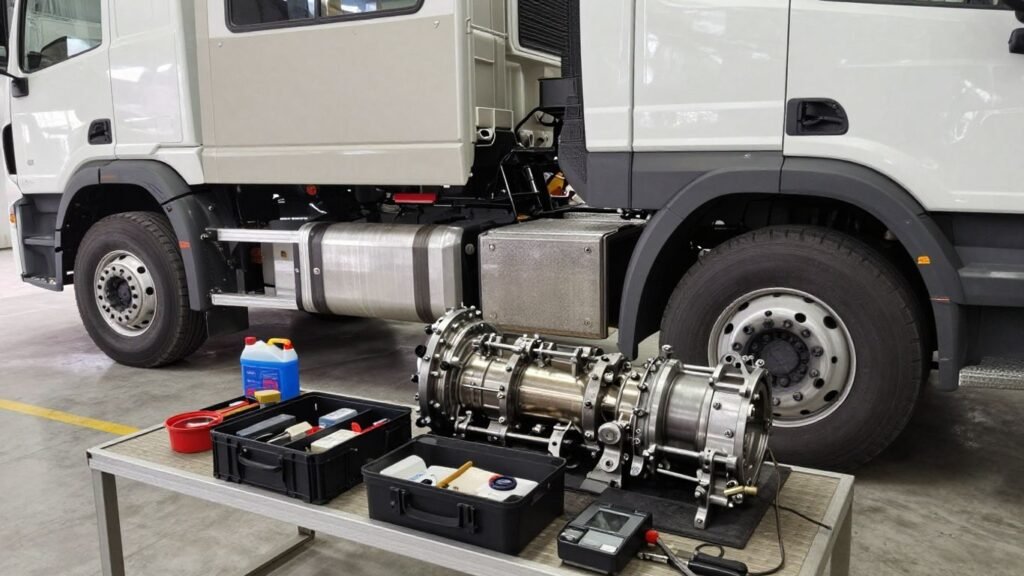
The I-Shift is an automated manual transmission for trucks. Its intelligent electronics monitor grade, speed, weight, and engine load, then select or hold a gear according to those conditions. The system combines automated gear selection with clutch operation, so it feels different from both a conventional manual and a torque-converter automatic.
The Volvo I-Shift is also offered in configurations for severe-duty work and with crawler gears for steep-grade startability and low-speed maneuverability. Those applications place different demands on the driveline. A fault diagnosis should therefore include the truck’s load pattern, road use, and fitted I-Shift version.
Automatic and dual-clutch gearbox options
An automatic gearbox generally changes ratio without a clutch pedal, using hydraulic pressure and electronic control to manage engagement. Depending on the design, it may use a torque converter, planetary gearsets, solenoids, and multiple clutch packs. A dual-clutch gearbox instead uses two clutches to prepare and transfer drive through separate gear groups.
The practical distinction matters during diagnosis. A shudder under acceleration, a delayed reverse gear, or a harsh upshift can come from fluid condition, pressure control, clutch wear, software, or an engine-related problem. The same road symptom does not identify one failed component by itself.
Matching the gearbox to the vehicle and driving conditions
A gearbox is selected around the engine’s torque, the vehicle’s weight, available space, drivetrain layout, and intended use. A lightly loaded passenger car and a heavily loaded truck may both need smooth low-speed control, but their transmission hardware and operating temperatures are not comparable. Towing, steep terrain, stop-start traffic, and off-road work all increase the value of correct specification and service history.
Before buying a replacement, record the transmission code, engine, model year, drive layout, software requirements, and any attached control module. This basic record prevents a common and costly mistake: treating a gearbox as a generic part when it is actually a vehicle-specific assembly.
How a Volvo gearbox works
A gearbox receives torque from the engine and delivers it to the driven wheels at a usable speed and force. Gear ratios allow the vehicle to pull away, climb, cruise, and reverse without asking the engine to perform every task at one speed. Clutches, shafts, bearings, gears, fluid, sensors, and control software all have to work together. A failure in one area can create symptoms elsewhere.
Gear selection, torque transfer, and clutch operation
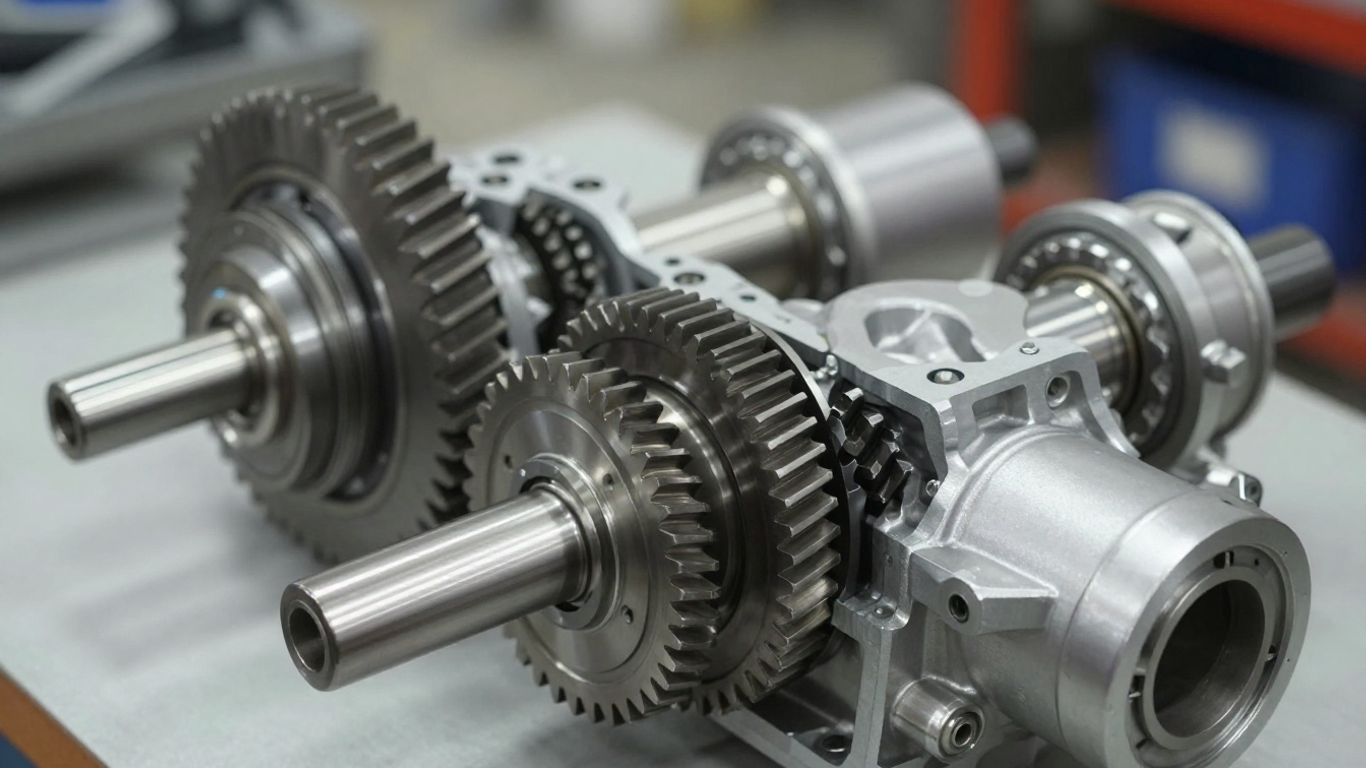
In a manual system, the clutch temporarily separates the engine from the gearbox so the driver can select a ratio. Synchronizers help equalize shaft speeds before engagement, while gears and shafts carry torque toward the differential or driveline. In an automated manual system, actuators and an electronic controller perform much of that sequence without a conventional clutch pedal.
Automatic systems use hydraulic pressure and electronically controlled valves to apply clutch packs or bands. Smooth engagement depends on the timing and pressure of those applications. A harsh shift may therefore reflect control pressure, fluid condition, mechanical wear, or incorrect adaptation rather than a damaged gear alone.
The role of transmission fluid and lubrication
Fluid reduces friction, carries heat away from working components, and provides the hydraulic medium used by many automatic transmissions. The required fluid is not universal: viscosity, friction characteristics, additives, and approval specifications vary by gearbox. Using the wrong product can alter shift quality or damage components over time.
Fluid level also needs context. A low reading may indicate a leak, while an overfilled unit can aerate the fluid and create unstable pressure. The inspection method, temperature, and vehicle position should follow the manufacturer’s procedure. Dark or contaminated fluid is a clue, not a complete diagnosis.
Electronic controls, sensors, and transmission software
Modern gearboxes use sensors to monitor speed, temperature, position, pressure, and other operating conditions. A control module uses that information to command solenoids, actuators, or clutch operation. A poor electrical connection can imitate a mechanical failure, particularly when a fault appears intermittently.
Software updates and learned clutch values can also affect shift behavior. That does not mean every harsh shift is fixed by programming. It means electronic testing should be part of a measured diagnosis before expensive mechanical work begins.
Differences between passenger-car and heavy-duty systems
Passenger-car gearboxes are usually optimized around compact packaging, refinement, fuel economy, and ordinary road loads. Heavy-duty systems must handle substantially different combinations of torque, gross weight, gradients, and operating hours. Cooling capacity, clutch design, gear count, control strategy, and service access may all differ.
For that reason, a truck gearbox should be assessed alongside the complete driveline. Engine output, axle ratio, trailer weight, road grade, and duty cycle can change the stress placed on the transmission. A repair plan that ignores those factors may simply repeat the original failure.
Common Volvo gearbox problems
Gearbox trouble rarely arrives as a single dramatic event. More often, the driver notices a small change in noise, engagement, shift timing, or fluid condition. Early attention can separate a relatively contained repair from damage involving gears, shafts, clutches, and control hardware. Keep a note of when the symptom occurs, whether the vehicle is warm, and whether the vehicle is loaded.
Warning signs of clutch or gear wear
Clutch wear may appear as engine speed rising without a matching increase in road speed, especially under acceleration or on an incline. A clutch that fails to release fully can make gears difficult to select and may cause the vehicle to creep with the pedal depressed. Grinding, humming, or a rhythmic whine can point toward synchronizer, bearing, or gear wear, although other driveline components can make similar sounds.
Warning lamps, a burning odor, vibration, and unexpected neutral selection deserve prompt attention. The safest response is to avoid repeated hard acceleration or towing until the cause is known. Continuing to drive can turn a manageable clutch or sensor problem into broader transmission damage.
Causes of slipping, grinding, and delayed engagement
Slipping can result from worn friction material, low or degraded fluid, inadequate hydraulic pressure, a faulty solenoid, or an incorrect control signal. Grinding during a manual shift often suggests clutch-release or synchronizer trouble, but a damaged linkage can also prevent clean engagement. Delayed engagement after selecting drive or reverse can be related to fluid level, pressure build-up, seals, or internal wear.
The useful question is not simply “which symptom is present?” but “under what conditions does it happen?” Record whether the fault occurs during cold starts, after extended driving, during an upshift, under load, or while reversing. Those details narrow the testing path.
Transmission fluid leaks, overheating, and contamination
Fluid leaks may come from seals, gaskets, cooler lines, housings, or damaged connections. A small leak can lower the level enough to affect lubrication and hydraulic operation, while overheating accelerates fluid breakdown and hardens seals. Water, clutch material, metal particles, or dirt can further change how the transmission operates.
A clean inspection around the case and cooler lines is useful, but it should not replace a proper level check. Do not assume every red or amber fluid beneath a vehicle came from the gearbox; engine oil, coolant, and power-steering fluid can be nearby. Identifying the fluid first avoids an expensive detour.
I-Shift fault codes and shifting irregularities
An I-Shift fault may involve the clutch actuator, gear-selection actuator, sensors, wiring, air supply, calibration, or internal transmission components. Shifting irregularities can appear as missed shifts, hesitation, repeated attempts to engage a gear, or a protective operating mode. The displayed code is a starting point, not a diagnosis in isolation.
Record the code, operating conditions, recent repairs, and whether the issue clears after cycling the ignition. Avoid repeatedly forcing the truck to move if the system cannot select a safe gear. A specialist can then compare stored faults with live data and mechanical checks.
Diagnosing Volvo gearbox issues
Good diagnosis is a process of elimination. Begin with the driver’s description, service records, fluid evidence, warning messages, and a careful visual inspection. Then combine electronic testing with a controlled road test and, where necessary, pressure or mechanical inspection. Symptoms are evidence, not a verdict.
Initial checks before professional testing
Before booking major work, check for obvious leaks, damaged wiring, loose connectors, unusual fluid smells, and changes in pedal feel. Confirm that the battery and charging system are healthy, since low voltage can create misleading electronic faults. Note the exact dashboard message rather than paraphrasing it.
A short record can make the appointment more productive:
- The gear selected when the symptom appears.
- Whether the transmission is cold, warm, or overheated.
- Vehicle speed, engine speed, road gradient, and load.
- Any noise, vibration, odor, leak, or warning lamp.
This information helps a technician reproduce the problem instead of relying on a vague report such as “it shifts badly.” It also reduces unnecessary parts replacement.
Using diagnostic tools to identify electronic faults
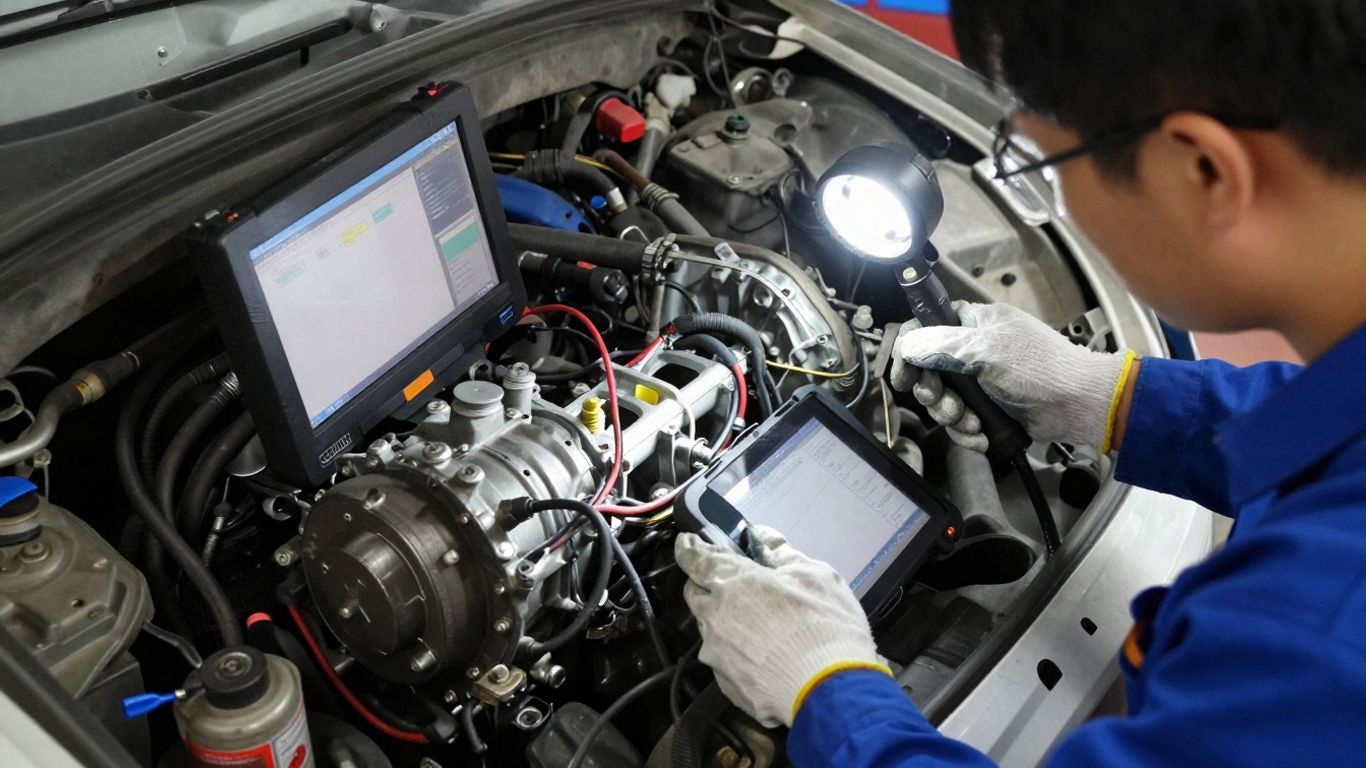
A suitable scan tool can retrieve stored and active transmission codes, examine live sensor data, and show whether the control module is requesting a gear or clutch action. Some systems also retain freeze-frame information from the moment a fault occurred. Testing should include wiring, grounds, connectors, and power supply where the code points to an electrical circuit.
Clearing a code without finding its cause is not a repair. Likewise, replacing a sensor because its reading looks unusual may miss a damaged wire or a mechanical condition that is producing the reading. Data becomes useful when it is compared with the symptom and with expected operating values.
Road-testing symptoms under different conditions
A controlled road test can reveal whether a fault is tied to temperature, gear, throttle position, speed, or load. The technician may compare gentle and firm acceleration, level roads and inclines, cold and warm operation, or drive and reverse engagement. Safety comes first, especially when the vehicle may unexpectedly lose drive.
The test should be documented rather than treated as a casual drive. Note the shift point, engine speed, delay length, noise, vibration, and whether the condition repeats. Reproducibility is often more valuable than a single dramatic incident.
When a gearbox specialist is needed
Seek specialist help when the vehicle cannot select a gear, fluid is leaking heavily, the transmission overheats, a warning lamp returns, or metal debris is found in the fluid. A specialist is also sensible when a replacement gearbox needs programming, calibration, or compatibility verification. Heavy-duty vehicles should be assessed promptly when shifting faults affect a loaded truck.
When comparing advice, ask what was tested, which evidence supports the diagnosis, and what warranty covers the proposed work. The broader habit of checking scope applies to any service purchase, whether researching restaurant interior designers, weekly garden planning, real estate marketing services, 18-wheeler blind spots, or hormone optimization. The subject changes, but vague promises still deserve careful questions.
Volvo gearbox maintenance and service
Maintenance is mainly about preserving fluid quality, temperature control, clutch adjustment, and clean electronic operation. The correct schedule depends on the gearbox, vehicle, mileage, use, and manufacturer procedure. Severe duty, frequent towing, and long periods in traffic can justify closer attention than ordinary commuting. Service records are especially valuable when the vehicle changes hands.
Recommended fluid checks and service intervals
Check fluid level and condition only by the specified procedure, since some transmissions require a particular temperature range or inspection position. Use the exact fluid specification and replace filters, seals, or gaskets when the service procedure calls for them. A fluid change cannot reverse worn gears, but it can prevent lubrication and pressure problems from being mistaken for inevitable wear.
Intervals should be based on the vehicle’s service information and actual duty cycle. A truck used in construction or heavy haul work may face very different conditions from one used on level highways. Keep receipts and record the fluid specification, quantity, mileage, and any debris found.
Clutch calibration and software updates
Automated manual transmissions may need clutch calibration after component replacement or certain repairs. Calibration allows the control system to learn the engagement point and coordinate clutch movement with gear selection. If the procedure is skipped, the transmission may shift harshly or fail to engage correctly even when the replacement parts are sound.
Software updates should be considered when a manufacturer procedure or diagnostic result supports them. They are not a substitute for correcting low fluid, worn hardware, damaged wiring, or an actuator fault. Ask the technician which adaptation or update was performed and whether the result was verified afterward.
Driving habits that reduce gearbox wear
Smooth inputs reduce shock through the clutch and gear train. Avoid holding a vehicle on a hill with the accelerator, resting a foot on a manual clutch pedal, or repeatedly selecting drive and reverse before the vehicle has stopped. Allowing the transmission to warm normally is preferable to aggressive acceleration immediately after startup.
These simple habits are particularly useful in stop-start traffic, where repeated clutch engagement produces heat. If a new hesitation or vibration appears, change the driving pattern only long enough to reach a safe place; do not use technique to conceal a developing fault.
Preventing damage during towing and heavy loads
Towing increases heat and torque demand, especially on grades, in low-speed traffic, or when the trailer is heavily loaded. Confirm the vehicle’s approved towing capacity and use the correct gear or operating mode for the conditions. Avoid prolonged clutch slipping and allow cooling pauses when the service guidance calls for them.
For a truck, the load, trailer, road surface, and grade all affect gearbox stress. A transmission designed for severe-duty use may still be damaged by overload, poor cooling, incorrect operation, or missed maintenance. Record unusual temperatures, warning messages, and changes in shift behavior after demanding work.
Repair, replacement, and ownership costs
The cheapest quote is not always the lowest-cost decision. A repair may be appropriate when damage is localized and the casing, shafts, and control hardware remain serviceable. Replacement may be more sensible when internal damage is extensive or a suitable tested unit is readily available. Either option should begin with a written diagnosis and a clear statement of what is included.
When a gearbox can be repaired instead of replaced
Repair is often considered when the fault is limited to a clutch, seal, bearing, synchronizer, solenoid, actuator, cooler line, or other serviceable part. The decision depends on teardown findings, parts availability, casing condition, and the rebuilder’s ability to test the completed unit. A gearbox with widespread gear and shaft damage may not be economical to rebuild.
Ask whether the estimate includes removal, inspection, seals, fluid, calibration, programming, and post-repair testing. A low initial figure can rise quickly when necessary ancillary work is excluded. The written scope matters as much as the headline price.
Choosing between used, reconditioned, and new gearboxes
A used gearbox may cost less, but its mileage, storage history, fluid condition, and testing record need to be known. A reconditioned unit can offer a clearer inspection and parts process, provided the rebuilder explains what was replaced and what warranty applies. A new unit generally offers the most predictable starting condition, though it may carry the highest parts cost.
For comparison, used Volvo gearboxes are commonly marketed with inspection, testing, warranty, and delivery details. Those claims still need to be checked against the specific unit and vehicle. Ask for the transmission code, donor details where relevant, test documentation, and return conditions before paying.
Evaluating compatibility, warranty, and installation quality
Compatibility includes more than the model badge. Confirm the transmission code, engine, drivetrain, gear ratios, connectors, control module, bell housing, mounting points, cooler arrangement, and software requirements. The installation may also require fresh fluid, new seals, clutch components, adaptation, or a relearn procedure.
Warranty terms should state duration, covered parts, labor responsibility, exclusions, and the conditions that could void coverage. Keep evidence of correct installation and servicing. If an advertised transmission information database is used for research, verify its details against the vehicle’s own identification and service documentation.
Estimating labor, parts, and long-term operating costs
A realistic estimate separates the gearbox, removal and refitting labor, diagnosis, fluid, seals, clutch or converter work, programming, shipping, tax, and any core charge. It should also allow for the possibility that inspection reveals additional damage. Comparing these categories makes two quotes genuinely comparable.
Long-term cost includes reliability, warranty support, future fluid service, fuel use, downtime, and the risk of a mismatched unit. A slightly higher upfront price may be reasonable when it includes documented testing, correct calibration, and meaningful coverage. The goal is not merely to restore movement, but to restore dependable operation.
Conclusion
A Volvo gearbox is best understood as part of a complete mechanical and electronic system, not as an isolated box of gears. Identify the transmission, document the symptom, test before replacing parts, and compare repair options by compatibility and warranty. Careful fluid service and sensible driving can reduce avoidable wear, while early professional diagnosis can keep a small fault from becoming a major bill.
Frequently Asked Questions
What are the most common signs of gearbox trouble?
Common signs include slipping, grinding, delayed engagement, harsh shifts, unusual noises, fluid leaks, burning odors, warning lights, and difficulty selecting a gear. The meaning depends on the gearbox type and the conditions in which the symptom appears.
Can low transmission fluid cause shifting problems?
Yes. Low fluid can reduce lubrication and hydraulic pressure, leading to delayed engagement, slipping, overheating, or harsh shifts. The source of the leak should be found rather than simply topping up the fluid repeatedly.
Is dark transmission fluid always a sign the gearbox is ruined?
No. Dark fluid may indicate age, heat, contamination, or clutch wear, but color alone cannot determine the extent of damage. A proper inspection should consider smell, particles, level, service history, and operating symptoms.
How long does a gearbox repair take?
The time varies with access, parts availability, diagnostic complexity, and whether the unit must be removed and rebuilt. A straightforward external repair may be quicker than a teardown, replacement, programming, and road-test sequence.
Should a used gearbox be serviced before installation?
It is wise to verify its condition, code, fluid requirements, seals, and test history before installation. Whether fluid, filters, seals, or other parts should be replaced depends on the unit and the supplier’s documented procedure.
Can software updates fix a gearbox problem?
A software update or calibration can address a control or adaptation issue when testing supports that conclusion. It cannot repair worn gears, damaged clutches, low fluid, failed wiring, or a broken actuator.
When should a vehicle stop being driven?
Stop driving and arrange professional help when there is heavy fluid loss, overheating, loss of drive, repeated warning messages, severe grinding, or an inability to select a safe gear. Continuing under those conditions can increase damage and create a safety risk.