

Key Takeaways
Good brake-pad choices begin with exact vehicle compatibility and end with careful installation and inspection. These points will help you make safer, more informed decisions about Volvo brake pads.
- Match the pads to your Volvo model, year, engine, axle, and brake configuration.
- Replace pads when friction material is low, wear is uneven, or braking symptoms appear.
- Inspect rotors, calipers, slide pins, and hardware rather than changing pads in isolation.
- Use the correct piston-retraction method and bed in new pads gradually.
- Smooth driving and prompt repairs can help brake pads last longer.
Understand how Volvo brake pads work
Brake pads are small but essential parts of a larger hydraulic braking system. When you press the pedal, the system moves the caliper so the pads clamp the rotor. That contact converts the vehicle’s motion into heat, allowing the car to slow in a controlled way. Understanding that process makes wear symptoms easier to interpret.
The role of brake pads in the braking system
A brake pad sits inside a caliper and presses against a rotating brake rotor. Its friction material is designed to tolerate repeated heat cycles while offering predictable pedal response. The backing plate, shims, clips, and caliper all help keep the pad positioned correctly, so a problem in one related component can look like a worn pad.
How friction creates stopping power
As the pad meets the rotor, friction resists rotation at the wheel. That resistance produces heat, which must be carried away through the rotor, caliper, and surrounding air. Heavy braking, towing, steep descents, and repeated stop-and-go traffic create more heat, while a properly matched pad maintains a stable response across ordinary temperature changes.
Differences between front and rear brake pads
Front brakes commonly handle a larger share of the work because braking shifts the vehicle’s weight forward. Rear pads may therefore wear at a different rate and may use a different shape, compound, or electronic parking-brake arrangement. Never assume that a front-pad specification applies to the rear axle, even when the vehicle appears similar.
How driving conditions affect pad wear
Urban traffic, hills, heavy loads, and frequent hard stops generally consume friction material faster than steady highway driving. Moisture, road salt, and grit can also affect hardware and caliper movement. A driver who notices a change in pedal feel or braking noise should investigate rather than treating it as ordinary wear.
Choose the right Volvo brake pads
Choosing Volvo brake pads is more precise than selecting a part by the badge alone. Model year, engine, axle, rotor size, caliper design, and electronic systems can all affect fitment. Start with the vehicle identification number or the manufacturer’s part information, then compare the replacement pad with the existing assembly.
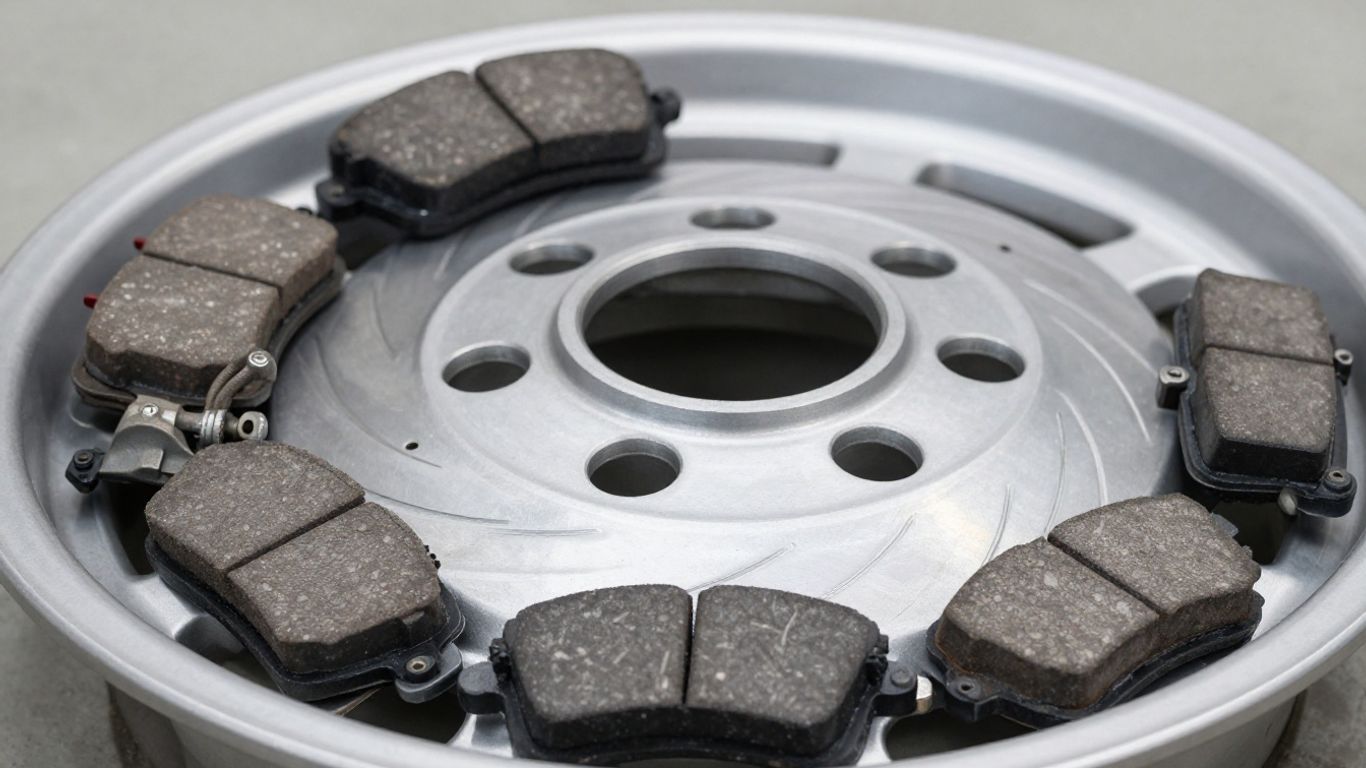
Match pads to your Volvo model and year
Record the exact model, model year, engine, trim, and axle before ordering. Some vehicles have more than one brake package, and a catalog may list several pad shapes for the same broad model description. Confirm the dimensions, wear-sensor provision, and included hardware against a trusted parts catalog or service manual.
Compare OEM and aftermarket options
Original-equipment pads are a useful reference for fit, noise behavior, and expected driving conditions. Aftermarket choices can also be suitable when their specifications match the vehicle and rotor, but price alone says little about quality. For drivers comparing a performance-oriented option, Brembo Xtra is described as offering dedicated brake pads for Volvo vehicles and a vehicle-selection widget for finding compatible components.
Ceramic, semi-metallic, and low-metallic materials
Pad compounds involve trade-offs rather than a single best answer. Ceramic formulations are often selected for quieter operation and reduced visible dust, while semi-metallic materials can offer strong heat handling with different noise and dust characteristics. Low-metallic compounds occupy another balance between friction response, noise, dust, and rotor interaction, so the vehicle’s approved specification should come first.
Check compatibility with rotors and calipers
A pad must fit the caliper bracket, contact the rotor correctly, and work with the vehicle’s wear sensor and parking-brake mechanism. The rotor’s diameter, thickness, and surface design matter as well. Brembo Xtra materials describe compatibility with particular Brembo Max, Xtra, and Sport discs, which illustrates why pad-and-rotor matching should be checked rather than assumed.
Recognize signs that Volvo brake pads need replacement
Brake wear does not always announce itself with one dramatic symptom. Noise, vibration, dust, and changes in pedal response may arise from pads, rotors, calipers, or hardware. Treat any new braking behavior as a reason to inspect the system, especially when several symptoms appear together.
Squealing, grinding, and other warning noises
A light squeal can result from pad vibration, surface conditions, or a wear indicator touching the rotor. Persistent squealing deserves inspection, while grinding is more urgent because it can mean the friction material is exhausted and the backing plate is contacting the rotor. Clicking or clunking may point to loose or poorly seated hardware rather than pad thickness alone.
Reduced braking performance or longer stopping distances
A longer stopping distance can reflect worn pads, overheated friction material, contaminated surfaces, low fluid, tire problems, or a hydraulic fault. Do not compensate by pressing harder and continuing to drive normally. If the pedal feels soft, sinks, or changes noticeably, have the full brake system checked promptly.
Brake dust, vibration, and uneven pad wear
Some dust is normal, but a sudden increase on one wheel may indicate dragging or uneven contact. Steering-wheel vibration during braking often points toward rotor or hub issues, while pedal pulsation can have several causes. Uneven pad thickness is particularly useful evidence because it can reveal restricted slide-pin or caliper movement.
Dashboard brake pad and warning indicators
A warning lamp or pad-wear message should be treated as information that needs confirmation, not something to reset and ignore. Sensor wiring, fluid level, and the broader brake-control system may also trigger warnings. Consult the vehicle information and inspect the brakes before replacing only the visible part.
Inspect Volvo brake pads and related components
A useful inspection looks beyond the outer pad. Wheel removal may be needed to see the friction material clearly, and both sides of the axle should be compared. Record what you find before ordering parts, because a worn rotor or restricted caliper can quickly damage fresh pads.
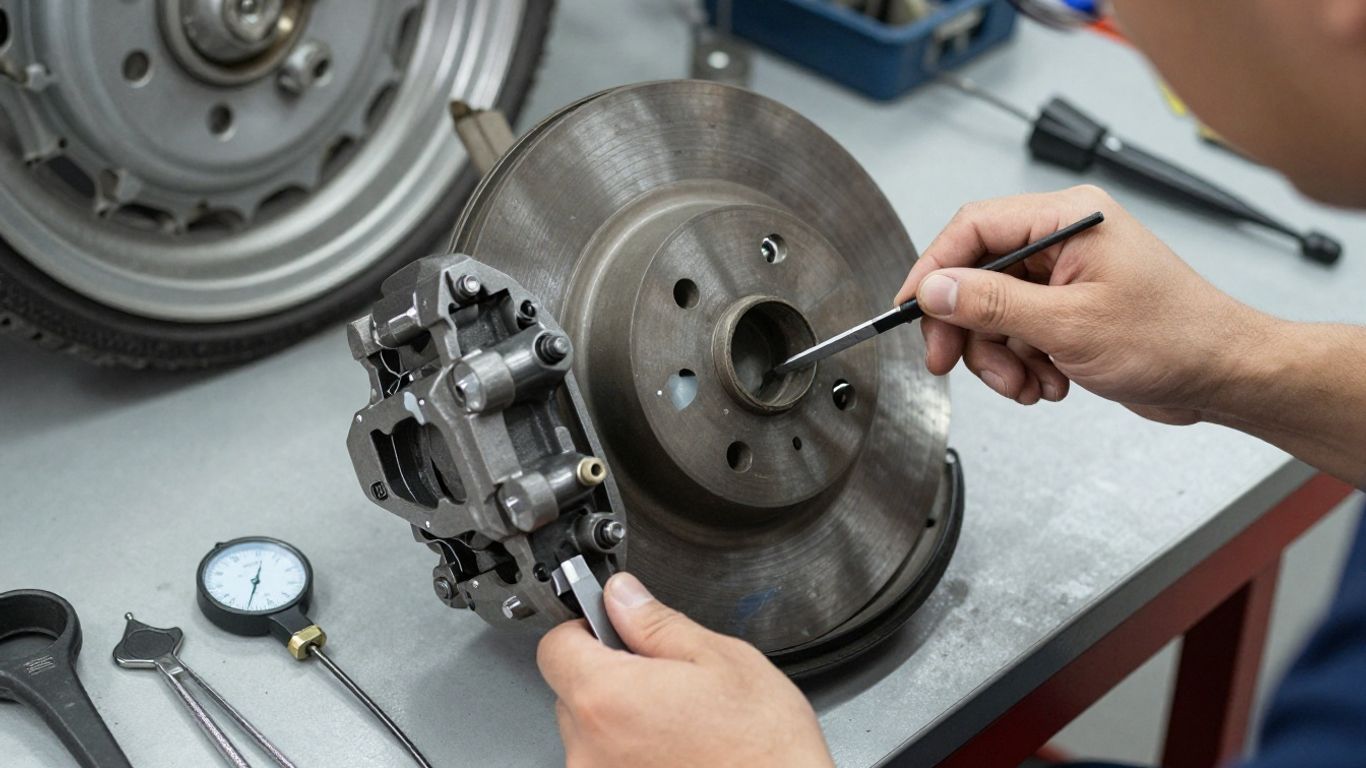
Measure remaining pad thickness
Measure the friction material at more than one point on each pad, since the inner and outer surfaces may not wear equally. Compare the measurement with the service limit for that exact brake assembly. The thinnest area matters most, and a pad that is cracked, contaminated, or separating should not be kept merely because some material remains.
Check rotor condition and thickness
Inspect the rotor for deep grooves, blue heat marks, cracks, a pronounced outer lip, or corrosion on the braking surface. Measure thickness at the specified points and compare it with the minimum marking or service-manual limit. A smooth-looking rotor can still be below specification, so visual inspection and measurement serve different purposes.
Identify sticking calipers and seized slide pins
The caliper should move as designed, and slide pins should travel smoothly with suitable lubricant where specified. A seized pin can leave one pad much thinner than its partner and may create heat at one wheel. If a wheel remains unusually hot or the car pulls during braking, diagnose the cause before fitting new pads.
Look for uneven wear patterns
Compare inner to outer pads and left to right. Tapered material, one-sided wear, or a pad that remains nearly untouched can indicate a bracket, piston, slide-pin, or hardware problem. A short inspection checklist helps keep the assessment consistent:
- Compare pad thickness on both sides of the axle.
- Check the rotor face for grooves, cracks, and heat discoloration.
- Confirm that clips and shims are seated correctly.
- Look for corrosion that could restrict pad movement.
These observations provide context for the repair. Replacing pads without addressing the source of uneven wear often leads to another premature replacement.
Replace Volvo brake pads safely
Brake work demands a stable vehicle, clean working habits, and the correct procedure for the specific axle. Read the service information before lifting the car, and never rely on a jack alone for support. If the braking system uses an electronic parking brake or unusual caliper design, follow the required service mode and tool instructions.
Prepare the vehicle and required tools
Park on a level surface, secure the vehicle, and support it with properly rated stands at approved points. Gather wheel chocks, basic hand tools, a torque wrench, a caliper piston tool, brake cleaner, and any specified replacement clips or sensors. Wear eye protection and avoid blowing brake dust into the air.
Follow the correct removal and installation steps
Remove the wheel, inspect the assembly, and support the caliper without hanging it from the brake hose. Keep the friction surfaces clean, replace hardware when specified, and install pads in their correct positions. Tighten fasteners to the vehicle’s stated torque, then check that the wheel rotates normally before lowering the car.
Retract the caliper piston appropriately
The piston may need to be pressed straight back or rotated while retracting, depending on the caliper and parking-brake arrangement. Forcing a piston in the wrong direction can damage the mechanism. Check the fluid reservoir as the piston moves back, and stop if resistance is abnormal rather than applying more force.
Bed in new pads after installation
After installation, pump the pedal until it feels firm before moving the vehicle. Perform several moderate stops in a safe area, allowing short cooling periods and avoiding an immediate hard stop from high speed. Follow the pad maker’s bedding guidance, because the process helps establish an even contact layer on the rotor.
Estimate Volvo brake pad replacement costs
The price of a brake-pad job depends on more than the pad box. Parts, labor, hardware, sensors, rotor condition, and regional shop rates all affect the invoice. Request an itemized estimate that states whether the price covers one axle or all four wheels.
Parts costs for different pad types
Basic replacement pads generally cost less than premium compounds or kits with sensors and hardware. Ceramic, semi-metallic, and low-metallic options may have different prices, but the cheapest part is not automatically the best value if it creates noise or does not suit the rotor. Confirm the exact fitment before comparing brands or materials.
Labor costs at a shop versus DIY replacement
A shop estimate includes inspection, lifting, cleaning, installation, torque checks, and sometimes electronic service procedures. DIY work can reduce labor expense, but only when the tools, time, and technical confidence are available. A mistake involving piston retraction, hardware, or torque can cost more than professional labor.
When rotors and hardware should be replaced together
Rotors should be considered when they are below minimum thickness, badly scored, cracked, heat-damaged, or unable to provide a suitable contact surface. Clips, shims, and wear sensors may also need replacement if corroded, damaged, or included as part of the specified kit. New pads cannot correct a rotor or caliper problem.
Factors that influence the total repair price
The vehicle’s brake package, local labor rate, accessibility of the hardware, and condition of the calipers all matter. A clear written estimate is easier to compare than a single bundled number. Even unrelated service businesses benefit from precise scope descriptions; for example, website design and development pages should describe their actual offering clearly rather than relying on vague labels, just as a brake estimate should name the work included.
Extend the life of Volvo brake pads
Brake pads last longest when the entire system works freely and the driver avoids unnecessary heat. Longevity is not a reason to postpone replacement, though. A pad that is thin, contaminated, or wearing unevenly needs attention even if the car still stops.
Use smooth braking techniques
Look farther ahead, lift off the accelerator early, and apply steady pressure instead of repeated sharp inputs. On descents, select an appropriate lower gear where suitable so the brakes are not carrying every bit of the load. Avoid resting a foot on the pedal, which can create constant light contact and heat.
Keep wheels and brake components clean
Road salt, grit, and corrosion can restrict pad clips or slide pins. During routine wheel cleaning, use products appropriate for brake components and never coat friction surfaces with polish or lubricant. A clean, freely moving assembly is easier to inspect and less likely to develop uneven contact.
Follow Volvo’s inspection schedule
Use the vehicle’s maintenance information as a baseline, then adjust inspections for towing, mountainous routes, severe winters, or heavy city traffic. Keep notes on pad measurements, rotor thickness, and any replaced hardware. Drivers who are also planning a small-business site may find a beginner website development guide useful for understanding why clear maintenance records matter: organization makes recurring checks easier to manage.
Respond promptly to brake system problems
A new pull, scraping sound, hot-wheel smell, warning light, or soft pedal should be checked soon. Continuing to drive can turn a modest pad or hardware repair into rotor, caliper, or tire damage. Other safety topics, such as truck blind spots, also reward early attention to changing road risks, but brake symptoms should always be handled by a qualified repairer when their cause is uncertain.
Conclusion
Choosing, inspecting, and replacing Volvo brake pads is a process of matching parts, checking the surrounding hardware, and respecting safe installation procedures. With regular inspections and calm driving habits, you can spot wear earlier and keep the braking system working predictably.
Frequently Asked Questions
How often should brake pads be replaced?
There is no single mileage interval for every vehicle. Driving style, traffic, terrain, load, climate, pad material, and brake design all affect wear, so thickness and condition inspections are more useful than mileage alone.
What pad thickness means replacement is needed?
Use the minimum thickness specified for the exact brake assembly. As a general safety practice, very thin friction material, damaged material, or a wear indicator should prompt immediate inspection rather than waiting for a convenient service interval.
Should brake pads be replaced in pairs?
Pads should normally be replaced on both wheels of the same axle so braking response remains balanced. The opposite axle may not need replacement unless its pads are also worn or damaged.
Can worn brake pads damage rotors?
Yes. Once friction material is depleted, the backing plate can contact the rotor and create grooves, heat, and rapid damage. Even before that point, uneven pad contact can affect rotor wear.
Why do new brake pads squeal?
Squeal can result from vibration, contamination, bedding problems, unsuitable hardware, or a caliper that is not moving freely. If it persists, inspect the complete assembly instead of assuming the sound is harmless.
Is brake dust always a sign of a problem?
No. Some dust is normal and varies by pad compound and driving conditions. A sudden difference between wheels, excessive dust, or dust accompanied by heat and pulling can indicate dragging or uneven wear.
Can brake pads be replaced without replacing rotors?
Often, yes, when the rotors remain above their minimum thickness and have an acceptable surface. Rotors that are cracked, deeply scored, heat-damaged, or below specification should be addressed at the same time.