

Key Takeaways
A timing belt service is scheduled maintenance, not a repair to postpone until a noise appears. The correct interval depends on the engine, model year, mileage, age, and service history.
- Confirm whether the engine uses a timing belt and check its specified interval.
- Replace related tensioners and pulleys as recommended, rather than changing only the belt.
- Consider the water pump while the belt is already accessible.
- Treat unexplained timing symptoms as a reason to stop driving and arrange an inspection.
- Keep invoices and replacement details with the vehicle’s service records.
Understanding the Volvo timing belt system
A Volvo timing belt is a toothed rubber belt that works inside the engine’s timing system. It has a precise job, and a small error in its position can affect the entire combustion cycle. Understanding that relationship makes the service interval easier to take seriously, even when the car still starts and drives normally.
What the timing belt does inside the engine
The belt transfers rotation from the crankshaft to the camshaft. That movement controls when the engine valves open and close in relation to the pistons. Unlike an accessory belt, it is enclosed behind protective covers and is not intended to be assessed by casual visual inspection alone.
The belt is exposed to heat, repeated flexing, and tension from the timing system. Its outer surface may look acceptable while its internal reinforcing material has aged, which is why mileage and time both matter.
How the belt keeps the crankshaft and camshaft synchronized
The crankshaft turns as the pistons move, while the camshaft operates the valves. The timing belt’s teeth engage matching sprockets so those shafts maintain a fixed relationship. If the belt moves even a small amount on a sprocket, valve timing can become incorrect.
Correct synchronization supports smooth starting, stable idle quality, and normal engine operation. A belt that has skipped, stretched, or lost proper tension can produce rough running before a complete failure occurs.
Timing belt versus timing chain in Volvo models
Not every engine uses a belt. Some engines use a timing chain, which has different inspection points, service procedures, and failure symptoms. The engine code, model year, and owner’s manual are more reliable guides than the vehicle’s badge or general internet advice.
A chain is not automatically maintenance-free, and a belt should not be judged by appearance alone. If the service history is unclear, a technician can identify the system before quoting the work.
Why belt condition affects engine performance and reliability
A healthy belt maintains the timing relationship the engine was designed to use. As components wear, tension can change and the belt may develop cracking, fraying, or damaged teeth. Preventive timing work protects reliability because it addresses a known service item before its failure becomes an engine event.
Engine performance can also suffer when timing is no longer precise. Loss of power, uneven running, or difficult starting deserves diagnosis rather than an assumption that the belt is simply old.
When to replace a Volvo timing belt
Replacement timing is set by the particular engine and model, so a single number cannot safely cover every vehicle. Owners should compare the manufacturer’s schedule with the date and mileage of the last service. When the records are incomplete, treating the belt as due is often safer than guessing.
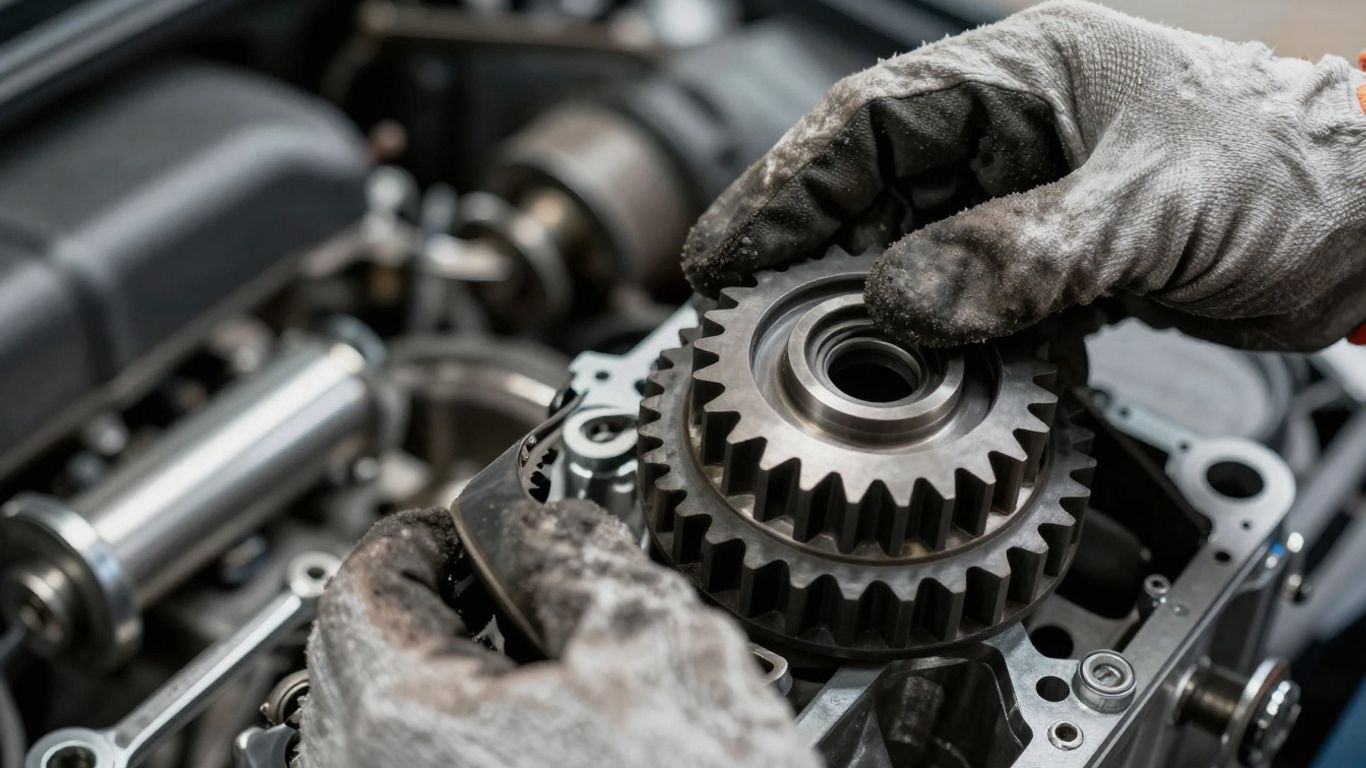
Recommended replacement intervals by mileage and age
Many published guides cite intervals around 80,000–100,000 miles or seven to ten years, but those figures are general references rather than a universal rule. The owner’s manual or a technician who verifies the exact engine should determine the applicable schedule.
The interval is reached by mileage or age, whichever comes first. A low-mileage vehicle can still need service because rubber, tensioners, and seals age while the car is parked.
Warning signs of belt wear or failure
A timing belt does not always provide a clear warning before it fails. Oil contamination, visible cracking, missing teeth, unusual belt noise, or timing-related fault symptoms should all prompt an inspection. If the engine suddenly stalls or will not restart, avoid repeated cranking until the timing system has been checked.
The timing belt replacement guide also explains the belt’s synchronizing role and the importance of following manufacturer recommendations. It is useful background, but the vehicle-specific schedule remains the deciding reference.
How driving conditions can shorten belt life
Frequent short trips, heavy traffic, high engine temperatures, dust, oil leaks, and long periods of idling can increase the demands placed on the timing system. These conditions do not necessarily create a different official interval, but they make timely maintenance and careful inspection more valuable.
A vehicle that works hard may accumulate less mileage than a highway commuter while still experiencing many heat cycles. Mentioning how the vehicle is used helps a technician assess related components during the service.
Why service records matter when buying a used Volvo
A dated invoice can show the mileage, parts replaced, and whether the water pump or tensioners were included. Without documentation, a seller’s memory or a belt that looks clean is not proof of recent service.
Before purchase, ask for the repair order and compare it with the vehicle identification information. If timing-system work cannot be confirmed, budget for replacement rather than building the purchase decision around an uncertain assumption.
What is included in a Volvo timing belt service
A proper timing belt service involves more than removing one belt and fitting another. Access can require substantial disassembly, so the technician should assess the surrounding components while the area is open. The written estimate should make clear which parts and checks are included.
Inspecting the belt, tensioner, and idler pulleys
The tensioner keeps the belt correctly loaded, while idler pulleys guide its path. A worn pulley bearing or weak tensioner can damage a new belt, so replacing only the belt may leave the original failure risk in place.
The technician should inspect belt teeth, edges, tension, pulley movement, and signs of contamination. Any abnormal play, roughness, or leakage should be discussed before reassembly.
Replacing the water pump at the same time
On engines where the timing belt drives the water pump, replacing the pump during the same service can be practical because access overlaps. A pump bearing or seal may fail later and require much of the same labor again.
This is not an automatic instruction for every engine. The technician should confirm the pump’s drive arrangement and condition, then explain whether replacement is appropriate for that specific vehicle.
Checking seals, covers, and accessory belts
Oil leaking onto the belt can shorten its life, while damaged covers can allow contamination into the timing area. Accessory belts and their tensioners should also be checked because they are separate from the timing belt but still affect everyday reliability.
A complete inspection may identify a crankshaft or camshaft seal that needs attention. Addressing a source of contamination during the service is usually preferable to installing new timing parts beside an active leak.
Choosing original equipment or aftermarket components
Parts should match the engine’s specifications and the repair shop’s quality standards. Ask which manufacturer supplies the belt kit, whether the kit includes the tensioner and pulleys, and what warranty applies to both parts and labor.
Price alone is a poor comparison when the labor to access the system is substantial. A clear quote that lists the belt, related hardware, pump if applicable, seals, and warranty gives a more useful basis for choosing components.
A simple estimate comparison can look like this:
| Estimate item | Why it matters | Question to ask |
|---|---|---|
| Belt kit | May include tensioner and pulleys | What exactly is in the kit? |
| Water pump | Access may overlap with belt service | Is it belt-driven on this engine? |
| Seals and covers | Leaks or damage can affect belt life | Were contamination and cover condition checked? |
| Warranty | Defines post-service protection | Does coverage include parts and labor? |
Reading the estimate this way helps prevent a low initial price from concealing omitted parts. It also gives the owner a record of what was actually installed.
The risks of delaying replacement
Delay can feel harmless when the vehicle runs quietly, but timing-belt failure is not always preceded by a dramatic symptom. The consequences range from a no-start condition to severe internal engine damage. Preventive service is therefore a risk decision as much as a maintenance decision.
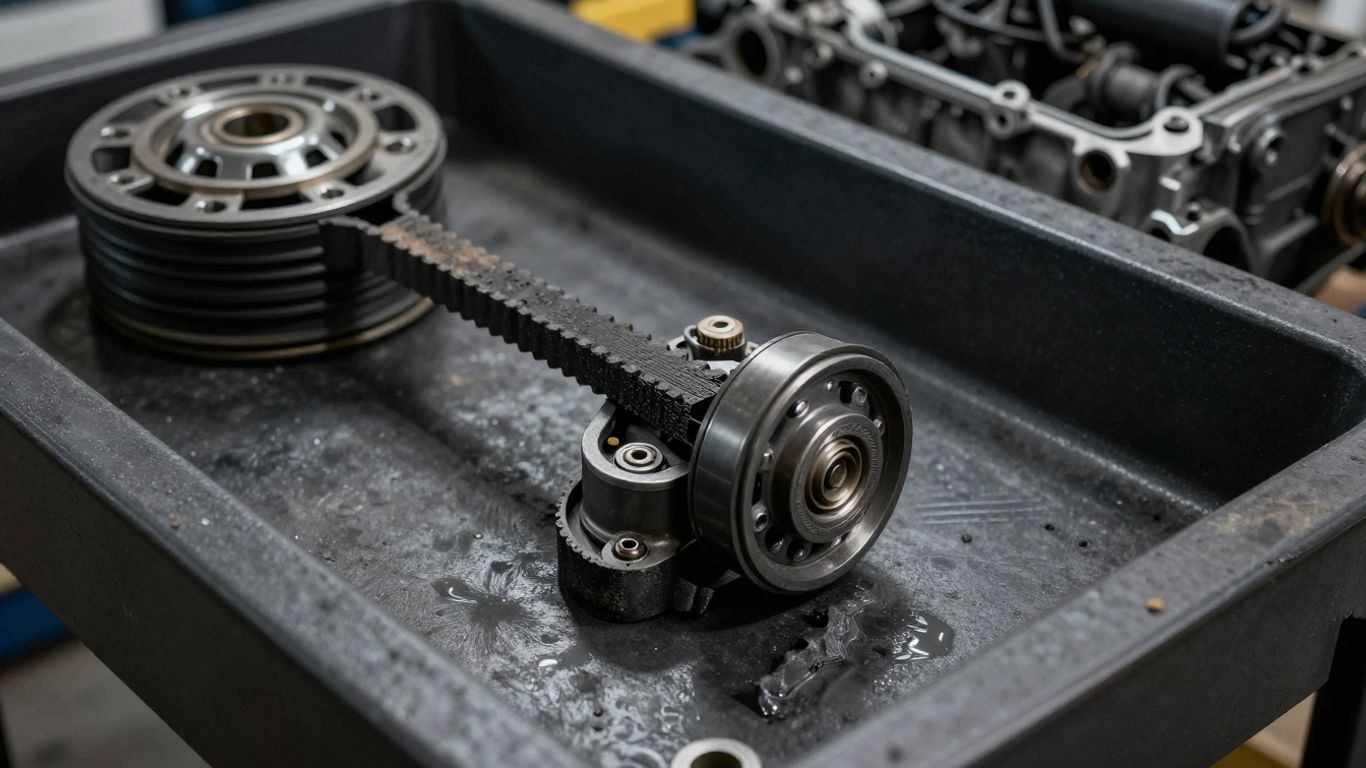
How a worn belt can skip timing
A belt may skip when its teeth are damaged, its tension is incorrect, or a pulley begins to seize. Once the crankshaft and camshaft lose their designed relationship, the engine may run poorly, stall, or fail to start.
A skipped belt can also create valve-to-piston contact in an interference engine. That possibility makes rough running or a sudden timing-related symptom a reason to stop driving and seek diagnosis.
What happens when the belt breaks
When the belt breaks, the camshaft may stop turning even though the crankshaft and pistons continue moving briefly. The engine can stop immediately, leaving the vehicle stranded, and internal contact may occur depending on the engine design and the position of its components.
The repair may involve more than fitting a replacement belt. A technician must inspect timing components and determine whether compression, valves, pistons, or cylinder-head parts have been affected.
Interference engines and internal valve damage
In an interference engine, the valves and pistons occupy overlapping space at different moments of the cycle. Correct timing keeps them apart. A broken or badly skipped belt can remove that protection and bend valves or cause other internal damage.
The exact outcome depends on the engine and the moment of failure. That is why a general statement about every Volvo engine is unsafe; the engine code and inspection findings should guide the diagnosis.
Comparing preventive maintenance with repair costs
Scheduled replacement is usually easier to plan than an unexpected breakdown. It can be arranged around the owner’s schedule, while a failed belt may require towing, testing, machine work, and a much larger repair decision.
The timing system diagnosis resource discusses the need to distinguish belt systems from chain systems and to investigate timing symptoms promptly. Its practical lesson applies broadly: identify the system first, then act on evidence rather than delay.
How Volvo timing belt replacement works
The exact procedure varies with engine layout, but the work follows a careful sequence. The vehicle is secured, access is created, timing references are confirmed, and the old components are removed without disturbing engine alignment. Precision matters more than speed during every stage.
Preparing the vehicle and confirming engine timing
The technician begins by verifying the vehicle and engine, reviewing the service concern, and checking the manufacturer’s procedure. The battery and other components may be handled according to the repair plan, and the crankshaft is positioned using the engine’s timing references.
Before removal, the technician confirms the existing alignment and looks for signs that the belt has already skipped. This provides useful diagnostic information and reduces the chance of carrying an unexplained timing problem into the repair.
Removing components to access the belt
Covers, accessory-drive parts, mounts, or other surrounding components may need to be removed. The exact list depends on the engine bay and the belt’s location. Fasteners and removed parts should be organized so reassembly follows the correct order.
With the belt exposed, the technician can inspect the sprockets, tensioner, idlers, seals, and water pump. Evidence of oil, coolant, dust, or bearing wear should be documented before new parts go in.
Installing and tensioning the new belt
The new belt is routed over the specified sprockets while timing marks remain aligned. The tensioner is then set according to the manufacturer’s procedure, using the correct tools and sequence rather than relying on feel alone.
Incorrect tension can be harmful in either direction. A loose belt may jump teeth, while excessive tension can burden bearings and other components.
Verifying timing alignment before starting the engine
Before the engine is started, the crankshaft is rotated by hand as required and the timing marks are checked again. This step confirms that the belt has seated correctly and that the engine moves freely through its cycle.
After reassembly, the technician starts the engine, listens for abnormal noise, checks for leaks, and confirms normal operation. The repair is not complete until the surrounding parts are secure and the service details are recorded.
A short visual explanation can help owners understand why alignment and tension checks are not optional. It should supplement, not replace, the vehicle-specific repair procedure.
Choosing a repair shop and planning the service
The best repair plan balances technical competence, transparent pricing, and convenient scheduling. Timing work is specialized enough that the shop should be comfortable identifying the engine and following its documented procedure. A little preparation before booking can prevent confusion later.
Questions to ask a Volvo technician
Ask whether the shop has confirmed the engine’s timing-belt interval and whether the quote includes the tensioner, idler pulleys, and water pump where appropriate. It is also reasonable to ask how timing alignment will be verified and what symptoms would require additional diagnosis.
A useful technician should be able to explain the work in plain language. If the answer is only a mileage number with no discussion of engine type or records, ask for more detail before authorizing the repair.
Comparing quotes and warranty coverage
Compare written estimates line by line instead of choosing the smallest total. Check labor, parts, shop supplies, taxes, diagnostic time, and any likely additional work. Warranty terms should identify whether parts and labor are both covered and what conditions apply.
The Volvo Cars of Louisville guide is one example of service-oriented background on timing-belt intervals and failure risks. For the repair itself, the estimate and warranty from the shop you select should remain the controlling documents.
When a dealership or independent specialist makes sense
A dealership may be convenient when factory service records, model-specific procedures, or software-related diagnosis are central to the visit. An independent specialist may be a good fit when the technicians regularly work on the relevant engine family and provide equally clear documentation.
The deciding factors are experience with the exact vehicle, the quality of the parts, the inspection process, and the support offered after the repair. Location alone should not determine the choice.
Records and checks to complete after replacement
Before collecting the vehicle, ask for the final mileage, parts replaced, warranty terms, and any recommendations for follow-up work. Confirm that the engine starts normally, there are no warning lights or leaks, and the accessory components have been reinstalled correctly.
Keep the invoice with the owner’s manual and note the next replacement date as well as the mileage. The Master’s European & Japanese Auto Repair resource illustrates why a shop’s ability to diagnose both belt and chain systems can matter when the vehicle’s timing arrangement is uncertain.
Conclusion
A Volvo timing belt deserves attention before it becomes a roadside failure. Confirm the correct interval, inspect the complete timing system, choose a shop that explains its work, and preserve the records; those simple habits make a major service more predictable and protect the engine from avoidable timing damage.
Frequently Asked Questions
How often should a timing belt be replaced?
The interval depends on the engine, model year, mileage, and age of the belt. Use the owner’s manual or a vehicle-specific service source, and follow whichever mileage or time limit comes first.
Does a timing belt make noise before it fails?
Sometimes, but not reliably. A belt can fail without a clear warning, so scheduled replacement is more dependable than waiting for a noise.
Can I inspect a timing belt myself?
A basic visual check may reveal contamination or obvious damage, but much of the belt is enclosed and its internal condition cannot be confirmed by sight. Professional inspection is safer for uncertain cases.
Should the water pump be replaced with the belt?
If the pump is driven by the timing belt or shares substantial access labor, replacement may be sensible. The correct decision depends on the engine design, pump condition, and service guidance.
What are signs that timing has skipped?
Hard starting, rough running, loss of power, stalling, or a sudden no-start condition can be related to incorrect timing. Stop operating the vehicle and arrange a diagnosis rather than continuing to crank it repeatedly.
Is a timing chain maintenance-free?
No. Chains and their tensioners can wear, and they require a different inspection approach. The vehicle’s engine configuration determines the appropriate maintenance plan.
What should a timing-belt service invoice include?
It should show the date, mileage, belt and related parts replaced, any water-pump or seal work, the warranty, and recommendations for future service. Detailed records help with future maintenance and resale.